Have you ever wondered about the difference between antithesis vs juxtaposition? These two literary devices both create contrast, which is why many students, writers, and readers confuse them. While they may seem similar at first, they work in different ways and produce different effects in writing.
Understanding antithesis vs juxtaposition can make it easier to analyze literature, write stronger essays, and recognize effective language in speeches, novels, and everyday communication.
In this guide, you’ll learn the antithesis definition, the juxtaposition definition, their key similarities and differences, and plenty of clear examples. We’ll also explain how to identify antithesis and juxtaposition, when writers use each technique, and whether they can appear together. By the end, you’ll confidently know what is the difference between antithesis and juxtaposition and how to use both correctly.
Quick Answer
The difference between antithesis and juxtaposition is that antithesis places opposite ideas in a balanced, parallel sentence to highlight contrast, while juxtaposition places two people, ideas, or objects side by side to emphasize their differences or similarities. In short, antithesis is a specific rhetorical device, whereas juxtaposition is a broader literary technique used in writing, art, and storytelling.
What Is Antithesis?
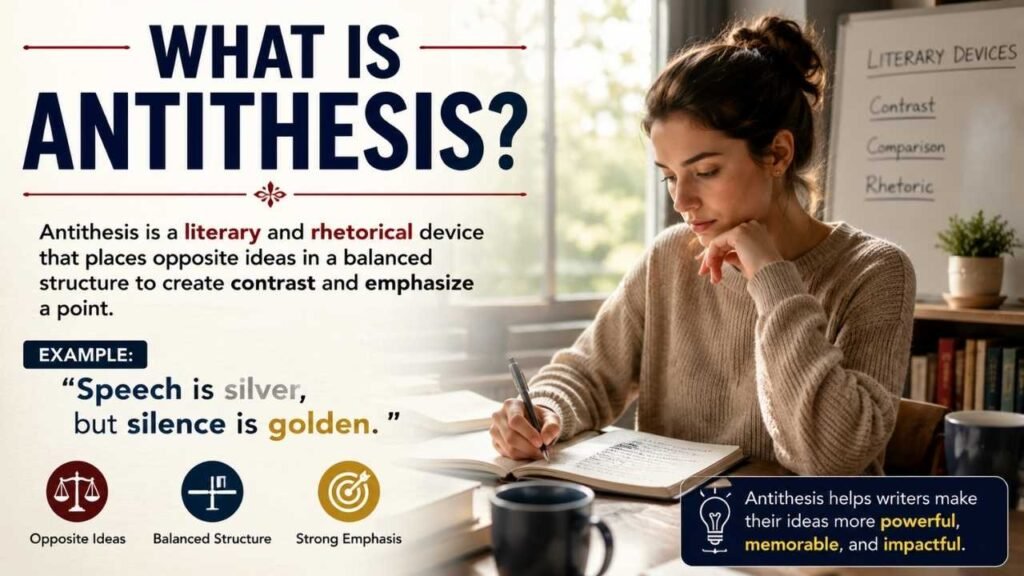
Antithesis is a literary device and rhetorical device that places opposite ideas in the same sentence using a balanced or parallel structure. Its purpose is to make the contrast stronger and more memorable for the reader.
The antithesis definition is simple: it compares two opposing ideas to create emphasis and improve the impact of a message.
Writers often use antithesis in speeches, essays, and literature because it makes arguments more powerful. If you enjoy learning about commonly confused English terms, you may also like our guide on Coach vs Couch, which explains another pair of words people often mix up.
What Is Juxtaposition?
Juxtaposition is a literary technique that places two people, objects, ideas, or situations close together so readers can notice their similarities or differences. Unlike antithesis, it does not require a balanced sentence or opposite words. The juxtaposition definition focuses on placement rather than structure.
For example, a modern skyscraper standing beside an old castle creates a strong visual contrast. In literature, authors use juxtaposition to develop characters, build themes, or create dramatic effects. You can also find it in films, advertisements, and everyday storytelling.
While both techniques highlight contrast in literature, juxtaposition offers more flexibility because it can compare almost anything without following a specific grammatical pattern.
What Is the Difference Between Antithesis and Juxtaposition?
The difference between antithesis and juxtaposition is mainly how each technique creates contrast. Antithesis compares opposing ideas using a balanced sentence with parallel wording, making it a specific figure of speech. Juxtaposition, however, simply places two things side by side to encourage comparison, making it a broader literary device.
Think of antithesis as one special type of contrast, while juxtaposition is a wider technique that can appear in stories, poems, speeches, and even visual art.
Understanding antithesis vs juxtaposition becomes easier when you focus on structure first. If the contrast depends on parallel wording, it is likely antithesis. If it depends on placement, it is usually juxtaposition. For another useful grammar comparison, explore our article on Or vs Nor.
Similarities Between Antithesis and Juxtaposition
Although they are different, antithesis and juxtaposition share several important features. Both are literary devices that help writers create contrast, capture attention, and make ideas easier to remember.
They encourage readers to compare different concepts, characters, or situations, leading to a deeper understanding of the text. Both techniques are common in novels, poetry, speeches, and persuasive writing because they add emphasis and improve the overall style. Another similarity is that both can strengthen themes and make important messages stand out.
However, they achieve these goals in different ways. Knowing these similarities helps you understand why people often confuse juxtaposition vs antithesis, even though each device follows its own unique approach.
Antithesis vs Juxtaposition: Examples in Literature
Looking at antithesis vs juxtaposition examples is one of the easiest ways to understand these writing techniques. Shakespeare frequently used antithesis to express opposing ideas, such as in “To be, or not to be.”
The balanced wording highlights the conflict between life and death. Charles Dickens often relied on juxtaposition by placing wealthy and poor characters together, helping readers see the sharp differences in society. George Orwell also used juxtaposition to compare freedom with control throughout his novels.
These examples show that both techniques create powerful effects, but they do so differently. Reading famous works carefully will help you identify antithesis and juxtaposition and understand why skilled writers use them to create memorable, meaningful literature.
Everyday Examples of Antithesis and Juxtaposition
You can find antithesis and juxtaposition in everyday life, not just in books. An example of antithesis is the sentence, “Work hard, play hard.” The two opposite ideas are presented in a balanced way, making the message memorable.
A common juxtaposition example is seeing an old bicycle parked beside a brand-new sports car. The two objects are placed together so their differences stand out. Advertisements also use these literary devices to grab attention by comparing products, lifestyles, or ideas.
These simple examples show what is the difference between antithesis and juxtaposition. One relies on carefully arranged words, while the other depends on placing contrasting things side by side to create meaning.
How to Identify Antithesis and Juxtaposition in Writing
Learning how to identify antithesis and juxtaposition becomes much easier when you know what to look for. First, check whether the sentence uses parallel structure with opposite ideas. If it does, you are probably looking at antithesis.
Next, ask yourself whether two people, places, objects, or ideas are simply placed together for comparison. If the answer is yes, it is likely juxtaposition. Remember that antithesis usually appears in a single sentence, while juxtaposition can appear across a paragraph, scene, or even an entire story.
A simple trick is to look for balanced wording in antithesis and side-by-side placement in juxtaposition. With regular reading, identifying both devices becomes much more natural.
Common Mistakes People Make
Many people misunderstand antithesis vs juxtaposition because both create contrast. One common mistake is thinking every juxtaposition is an antithesis. This is not true because antithesis follows a balanced sentence pattern, while juxtaposition does not.
Another mistake is confusing antithesis with oxymoron or paradox. Although these are also literary devices, they work differently. Some readers also believe juxtaposition must compare complete opposites, but it can compare ideas that are only slightly different.
To avoid confusion, always focus on how the comparison is created. If the contrast comes from parallel wording, it is antithesis. If it comes from placing things together, it is juxtaposition.
Can Antithesis and Juxtaposition Be Used Together?
Yes, antithesis and juxtaposition can appear together in the same piece of writing. In fact, many skilled authors combine these writing techniques to create a stronger effect.
This is juxtaposition because the two settings are placed together. If a character then says, “We seek peace, yet we choose conflict,” the sentence uses antithesis because it presents opposite ideas in a balanced structure.
Together, these techniques make the message more powerful and memorable. Understanding this relationship helps answer a common question: Can antithesis and juxtaposition be used together? The answer is yes, and writers often use both to strengthen their storytelling.
Related Literary Devices You Should Know
To fully understand antithesis vs juxtaposition, it also helps to learn a few related literary devices. An oxymoron joins two opposite words, such as “deafening silence.” A paradox is a statement that seems impossible but reveals a deeper truth.
Irony occurs when the result is different from what is expected. Parallelism repeats a similar grammatical pattern to improve rhythm and clarity, and it often supports antithesis. These devices all improve writing in different ways, but they are not the same as antithesis or juxtaposition.
Knowing the differences will make your literary analysis more accurate and help you recognize the techniques used by authors, speakers, and professional writers.
FAQs
Is antithesis a type of juxtaposition?
No. Antithesis is a specific rhetorical device, while juxtaposition is a broader literary technique.
Which is easier to identify?
Antithesis is usually easier because it uses parallel structure and opposite ideas.
Can juxtaposition compare similar things?
Yes. It can compare both similar and different ideas to highlight important details.
Where is antithesis commonly used?
It often appears in speeches, essays, poetry, and persuasive writing.
Where is juxtaposition commonly used?
It is common in literature, films, advertisements, photography, and visual storytelling.
Do both devices create contrast?
Yes. Both emphasize contrast, but they achieve it in different ways.
Why should students learn these devices?
Understanding them improves reading, writing, and literary analysis, making it easier to recognize an author’s purpose.
Conclusion
Understanding the difference between antithesis and juxtaposition is easier once you know how each technique creates contrast. Antithesis uses a balanced sentence with opposing ideas, while juxtaposition places people, objects, or ideas side by side to encourage comparison.
Although both are valuable literary devices, they serve different purposes and follow different patterns. By studying clear definitions, practical examples, and famous works of literature, you can confidently identify antithesis and juxtaposition in any text.
Whether you are preparing for an exam, improving your writing, or exploring English literature, mastering these techniques will help you communicate ideas more effectively and appreciate the creativity behind great writing.