Irony vs Coincidence: What’s the Difference? Meaning & Examples
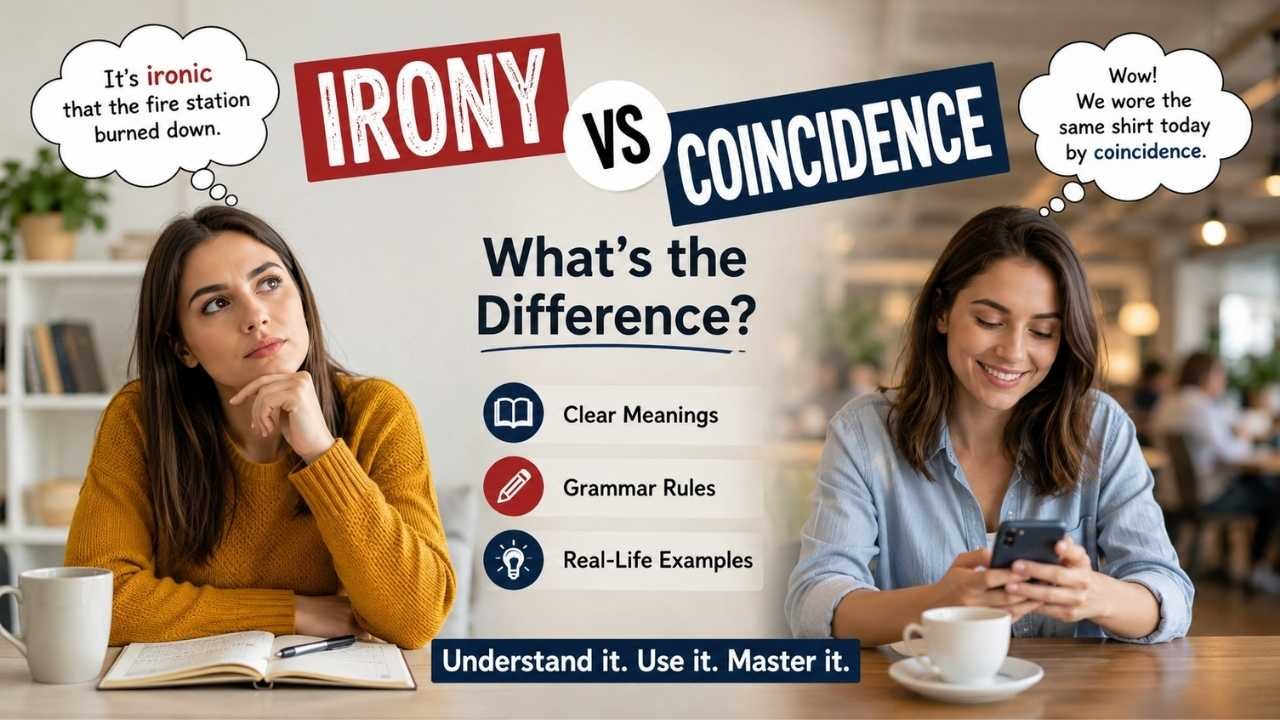
Irony vs coincidence comparison showing their meanings, key differences, and examples.

Have you ever heard someone describe an unusual event as Irony vs Coincidence when it was actually just a coincidence? You’re not alone. Many people confuse these two words because both involve unexpected situations. However, they have very different meanings.  Irony happens when the outcome is the opposite of what you expect, while a coincidence … Read more
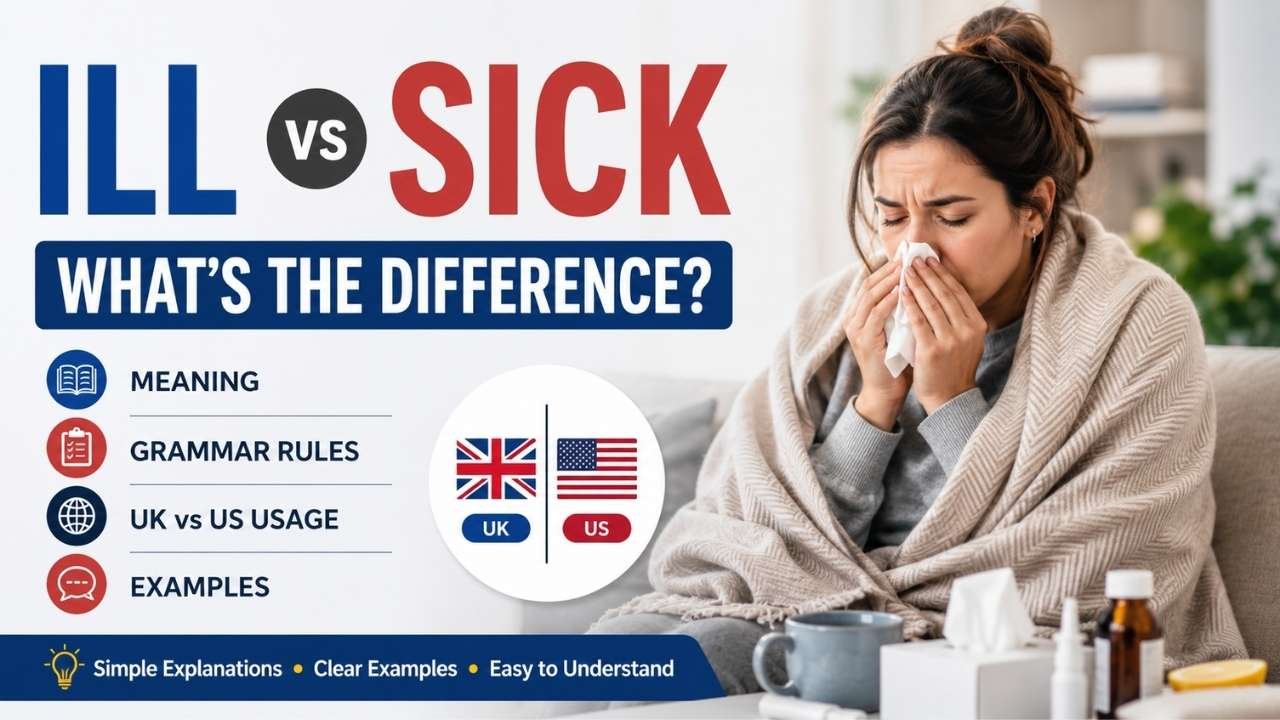

Ill vs Sick: What’s the Difference? Meaning & Examples

In this guide, you'll discover ill vs sick explained with simple grammar rules, clear examples, and practical tips. 

Have you ever wondered whether you should say “I’m ill” vs “I’m sick”? Although these two words often describe someone who is unwell, they are not always used in the same way.  Understanding the difference between ill and sick can help you speak and write more naturally, especially if you’re learning English or communicating with … Read more

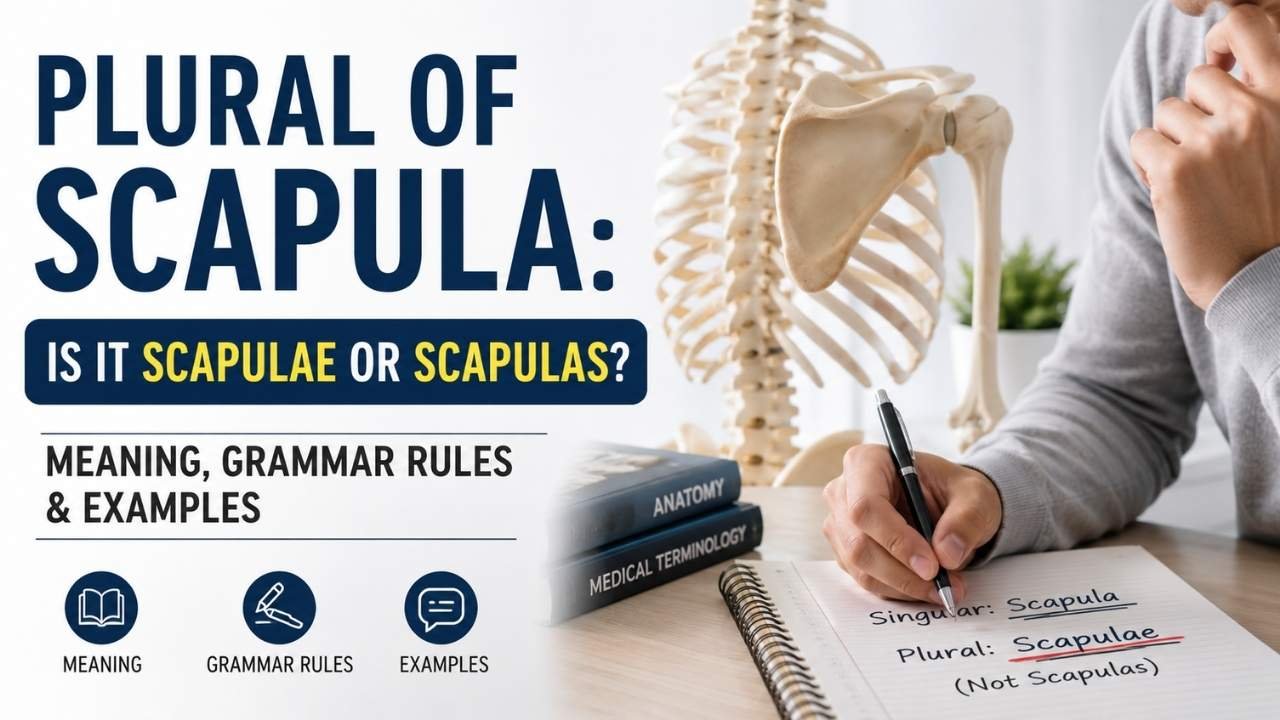
Plural of Scapula: Scapulae or Scapulas? Meaning & Examples

If you've ever wondered about the plural of scapula, you're not alone.

If you’ve ever wondered about the plural of scapula, you’re not alone. Many English learners, students, and healthcare professionals ask whether the correct plural is scapulae or scapulas. Since scapula comes from Latin, its plural follows a different rule than most English nouns, which often causes confusion.  Understanding the plural form of scapula is helpful … Read more

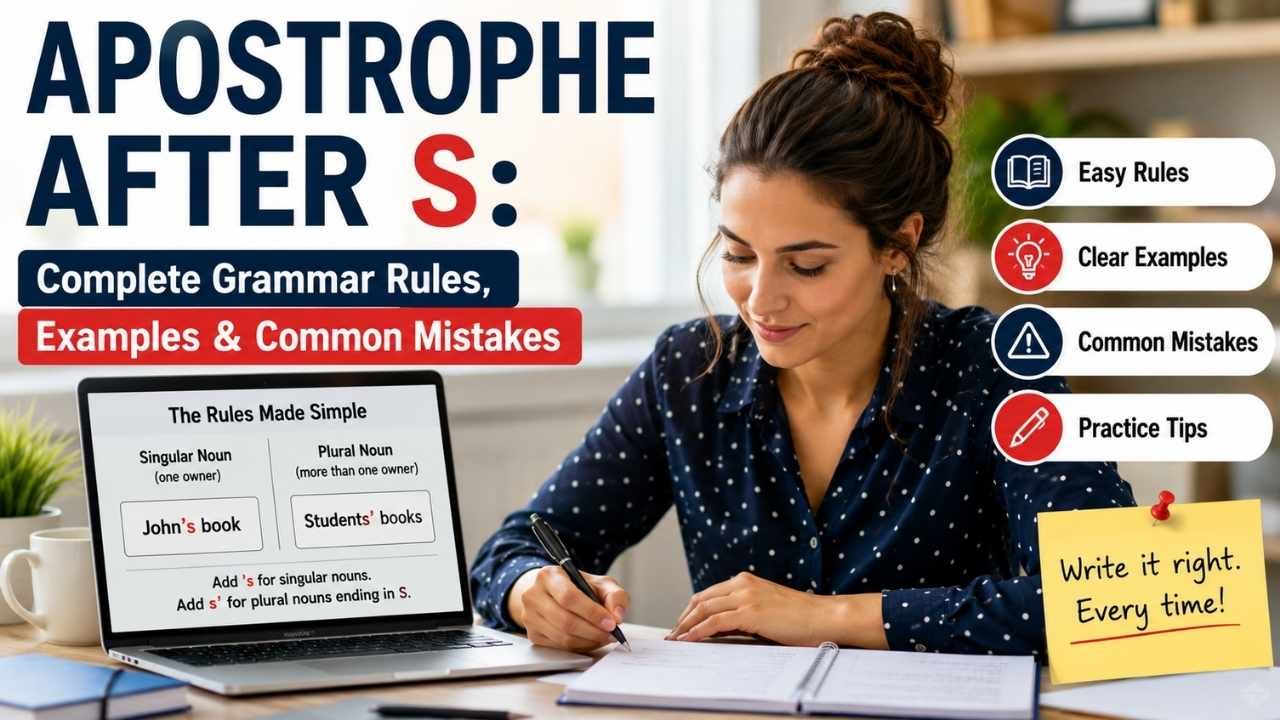
Apostrophe After S: Complete Grammar Rules & Examples

The good news is that the apostrophe after S follows clear rules once you understand the difference between singular possessive and plural possessive nouns.

Have you ever wondered where the apostrophe should go after the letter “S”? Many people get confused by grammar rules like teacher’s vs. teachers’ or James’s vs. James’. The good news is that the apostrophe after S follows clear rules once you understand the difference between singular possessive and plural possessive nouns.  Whether you’re writing … Read more

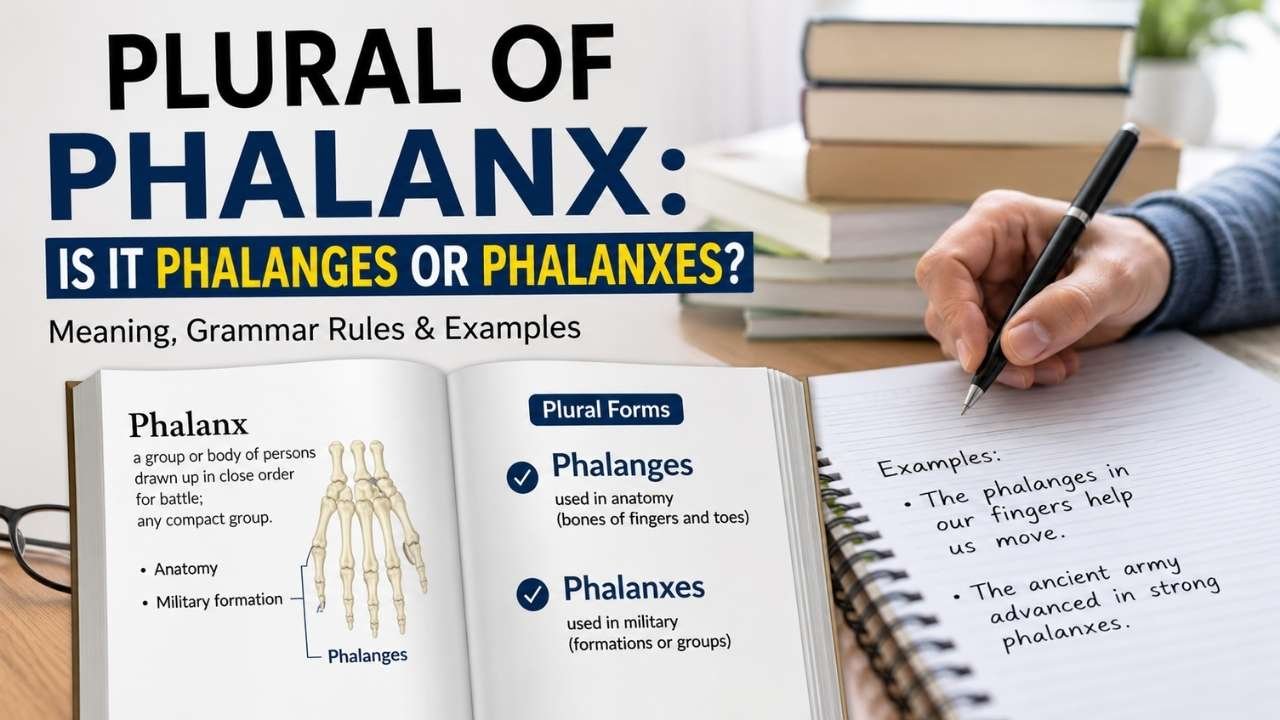
Plural of Phalanx: Phalanges or Phalanxes? Meaning & Examples

If you've ever wondered about the plural of phalanx, you're not alone

If you’ve ever wondered about the plural of phalanx, you’re not alone. Many English learners, students, and professionals ask whether the correct plural is phalanges or phalanxes. The good news is that both forms are correct, but they are used in different situations. In anatomy, phalanges usually refers to the bones in your fingers and … Read more