
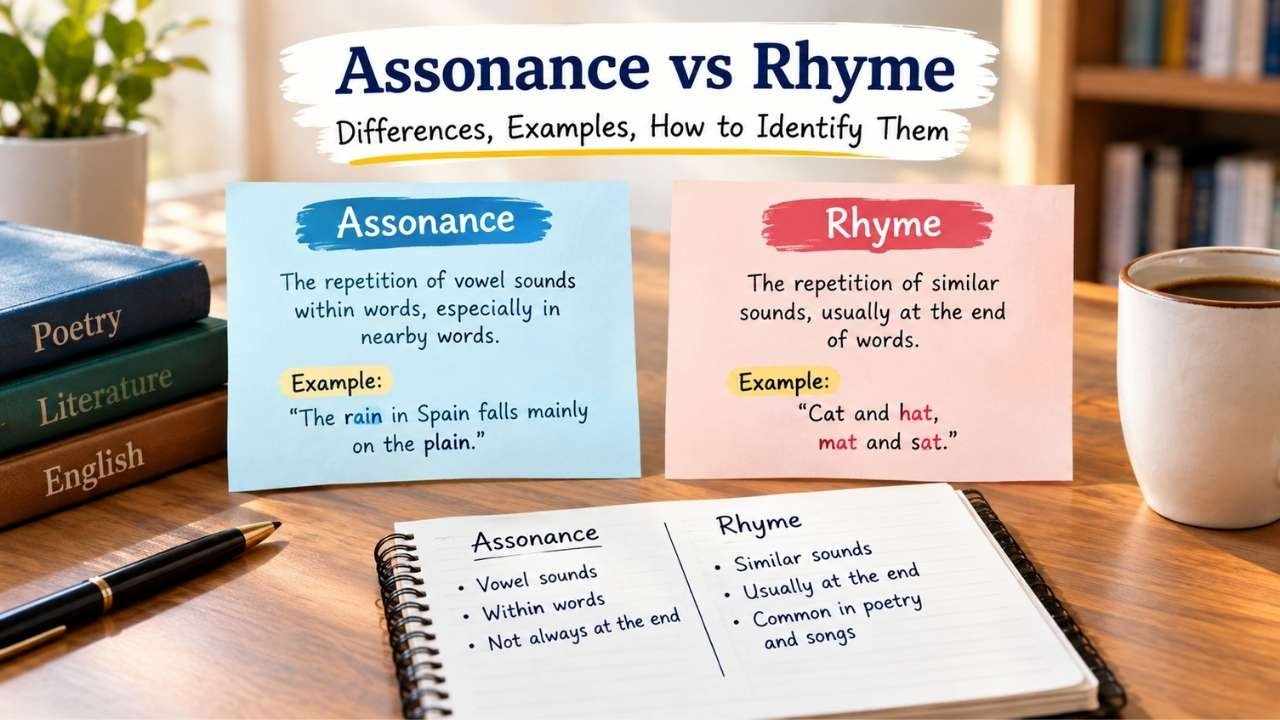
Assonance vs Rhyme is a common topic that confuses many students, writers, and poetry lovers. Both are literary devices that use repeated sounds to create rhythm, emotion, and a memorable effect, but they work in different ways.
Assonance focuses on the repetition of vowel sounds, while rhyme usually involves matching sounds, especially at the ends of words. Understanding the difference between assonance and rhyme can help you analyze poems, improve your writing skills, and recognize different sound devices in poetry.
In this guide, we will explain what assonance and rhyme mean, compare their key differences, explore examples, and show how writers use these techniques to make their words more powerful and engaging.
Quick Answer
Assonance and rhyme are both sound devices in poetry, but they are different. Assonance is the repetition of similar vowel sounds within nearby words, while rhyme is the repetition of matching sounds, often at the ends of words. Writers use both techniques to create rhythm, emotion, and a memorable effect in poems, songs, and creative writing.
What Is Assonance? Definition, Meaning, and Examples
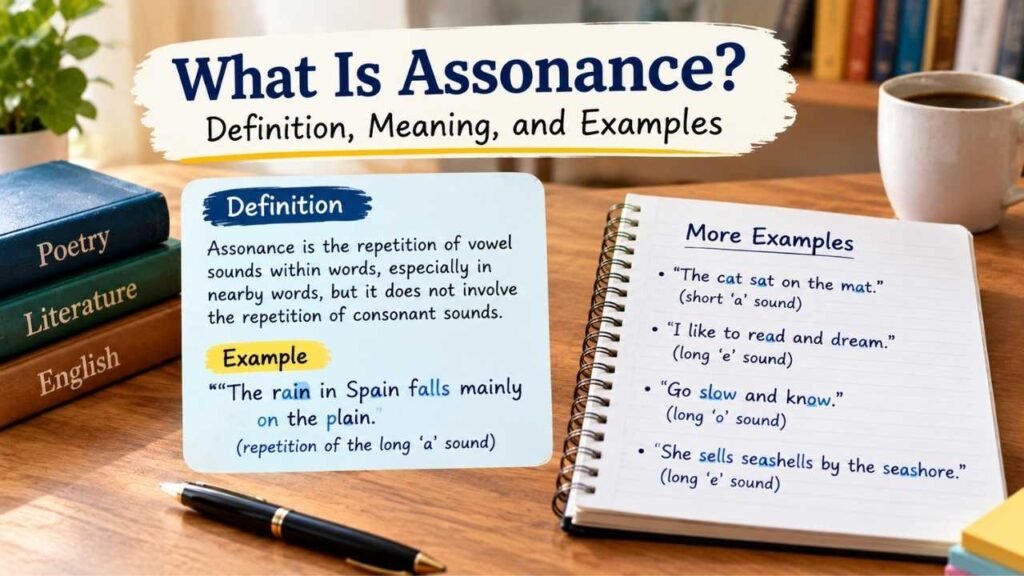
Assonance is a literary device that uses the repetition of similar vowel sounds in nearby words. Unlike rhyme, the repeated sounds do not need to appear at the end of words. Writers use assonance to add rhythm, create a mood, and make sentences sound more interesting.
For example, in the phrase “the light of the fire,” the repeated long “i” sound creates assonance. This sound technique is common in poetry, songs, and creative writing because it helps words flow smoothly.
Understanding the assonance definition makes it easier to recognize how writers use vowel repetition to create a stronger emotional effect in their work.
How Does Assonance Work in Poetry and Writing?
Assonance in poetry works by repeating vowel sounds throughout a line or sentence to create a musical effect. Writers carefully choose words with similar sounds to influence the rhythm and feeling of their writing.
Unlike exact word repetition, assonance focuses only on the sound, not the spelling. For example, words like “slow,” “road,” and “home” share a similar vowel sound. This technique can make writing feel calm, dramatic, or emotional depending on how it is used.
When learning sound devices, it is helpful to understand how sounds change meaning and style, similar to understanding word differences like Reel vs Real where pronunciation and meaning create different effects.
What Is Rhyme? Definition, Meaning, and Examples
Rhyme is a sound device in poetry where words have similar or matching sounds, usually at the end of lines or phrases. It is one of the most common poetic devices because it creates rhythm, structure, and a memorable pattern.
For example, the words “light” and “night” rhyme because they share the same ending sound. The rhyme definition focuses on matching sounds rather than only repeating vowels.
Writers use different types of rhyme to make poems, songs, and stories more enjoyable to read or hear. Understanding what is rhyme helps readers identify how poets create musical patterns and make their writing more engaging.
How Does Rhyme Work in Poetry?
Rhyme in poetry works by connecting words through similar sounds to create flow and organization. Poets often use rhyme at the end of lines, known as end rhyme, but they can also place rhyming words within the same line, called internal rhyme.
These patterns help readers remember verses and make poems sound more balanced. Rhyme can also add emotion, humor, or emphasis to certain ideas.
While identifying rhyme, it is important to focus on sound instead of spelling, just as words with different meanings may look similar, such as Illicit vs Elicit. Learning how rhyme works allows writers to use this technique effectively and create stronger poetic expressions.
Assonance vs Rhyme: Key Differences at a Glance
The main difference between assonance and rhyme is the type of sound being repeated. Assonance focuses on repeating vowel sounds inside words, while rhyme usually focuses on similar sounds at the end of words.
Both are important literary devices that help writers create rhythm and make their writing more enjoyable. However, they are used in different ways. Assonance can appear anywhere in a sentence or poem, while rhyme often follows a specific pattern, such as an end rhyme scheme.
Understanding these differences makes it easier to identify assonance vs rhyme in poems, songs, and other forms of creative writing.
| Feature | Assonance | Rhyme |
| Main focus | Repeated vowel sounds | Matching sounds |
| Location | Anywhere in words | Usually word endings |
| Purpose | Creates mood and rhythm | Creates pattern and flow |
Assonance vs Rhyme Examples: Understanding the Difference
Looking at examples is one of the easiest ways to understand assonance vs rhyme. In assonance, the repeated sound is usually a vowel sound. For example, “The mellow wedding bells” repeats the short “e” sound, creating assonance.
In rhyme, words share similar ending sounds, such as “bright” and “night” or “play” and “day.” These examples show that rhyme often depends on matching word endings, while assonance depends on repeated vowel sounds inside words.
Writers use both techniques to improve rhythm and style. By comparing examples of assonance and rhyme, readers can quickly recognize how each sound device works in poetry and creative writing.
Is Assonance a Type of Rhyme?
Many readers ask, “Is assonance the same as rhyme?” The answer is no. Although both use repeated sounds, they are separate poetic devices. Assonance only repeats vowel sounds, while rhyme usually involves matching vowel and consonant sounds, especially at the end of words.
However, some forms of rhyme may include assonance because vowel sounds are part of the overall sound pattern. This connection is why people sometimes confuse these terms.
Understanding the difference between assonance and rhyme helps writers choose the right technique for their purpose. Assonance creates a softer sound effect, while rhyme often creates a stronger and more noticeable pattern.
Alliteration vs Assonance vs Consonance: What’s the Difference?
Assonance, alliteration, and consonance are closely related sound devices in poetry, but each focuses on a different type of sound repetition. Assonance repeats vowel sounds, such as the “o” sound in nearby words.
Alliteration repeats the beginning consonant sounds, like “wild winds whistle.” Consonance repeats consonant sounds anywhere in words, such as “blank and think.” These techniques help writers create rhythm, emotion, and a stronger connection with readers.
Learning the difference between these literary devices makes poetry analysis easier. While rhyme focuses mainly on matching sounds, these other devices create different effects through sound patterns and word choices.
Types of Rhyme Every Writer Should Know
Writers use different types of rhyme to create unique effects in poems and songs. The most common type is perfect rhyme, where words have the same ending sounds, such as “cat” and “hat.”
Another type is end rhyme, which appears at the end of lines, while internal rhyme happens within a single line. Writers may also use slant rhyme or near rhyme, where words have similar but not identical sounds.
Understanding these rhyme types helps readers and writers explore different ways to create rhythm. When comparing assonance vs rhyme, knowing rhyme patterns makes it easier to understand why rhyme creates a stronger sound connection between words.
How to Identify Assonance and Rhyme in a Sentence or Poem
Learning how to identify assonance and rhyme becomes easier when you focus on sounds instead of spelling. First, read the sentence or poem aloud and listen for repeated sounds. If you notice repeated vowel sounds within nearby words, it may be assonance.
If words have matching ending sounds, they are likely examples of rhyme. Another helpful method is to separate the words and compare their pronunciation. Writers and students can use this simple process to recognize different poetic devices.
Understanding these patterns improves poetry analysis and helps readers see how sound choices affect the meaning and emotion of a piece of writing.
Why Do Writers Use Assonance and Rhyme?
Writers use assonance and rhyme to make their writing more powerful, memorable, and enjoyable. These sound devices can create rhythm, highlight important ideas, and influence the mood of a poem or song.
Assonance often creates a smooth and subtle sound effect, while rhyme can make lines feel organized and easy to remember. Both techniques help writers control the flow of language and connect with readers emotionally.
Poets, songwriters, and authors use these methods to make their words stand out. By understanding these writing techniques, beginners can improve their own creative writing and use sound patterns more effectively.
Common Mistakes When Confusing Assonance and Rhyme
Many people confuse assonance and rhyme because both involve repeated sounds. A common mistake is thinking that every repeated sound is rhyme. However, rhyme usually depends on matching sounds, often at the end of words, while assonance only focuses on repeated vowel sounds.
Another mistake is confusing assonance with alliteration, which involves repeated beginning consonant sounds. Some learners also focus on spelling instead of pronunciation, which can lead to incorrect identification.
Understanding these differences helps students correctly recognize literary devices in poems and writing. With practice, identifying these sound patterns becomes simple and improves overall understanding of poetry.
FAQs
What is the main difference between assonance and rhyme?
Assonance repeats vowel sounds, while rhyme repeats matching sounds, usually at word endings.
Can a word have both assonance and rhyme?
Yes, some words or phrases can contain both repeated vowel sounds and matching ending sounds.
Is assonance only used in poetry?
No, writers also use assonance in songs, stories, speeches, and creative writing.
Why do writers use rhyme?
Writers use rhyme to create rhythm, structure, and memorable patterns.
Why is assonance important in writing?
Assonance helps create mood, musical quality, and emotional impact.
Conclusion
Understanding assonance vs rhyme helps readers and writers recognize how sound creates meaning in language. While both are important literary devices, they work differently.
Assonance focuses on repeating vowel sounds within words, while rhyme usually matches sounds at the ends of words. Both techniques add rhythm, emotion, and creativity to poetry, songs, and writing.
By learning their differences and examples, you can easily identify these sound devices in poetry and understand why writers use them. Whether you are studying literature or improving your own writing skills, knowing how assonance and rhyme work will help you appreciate the power of sound in language.