
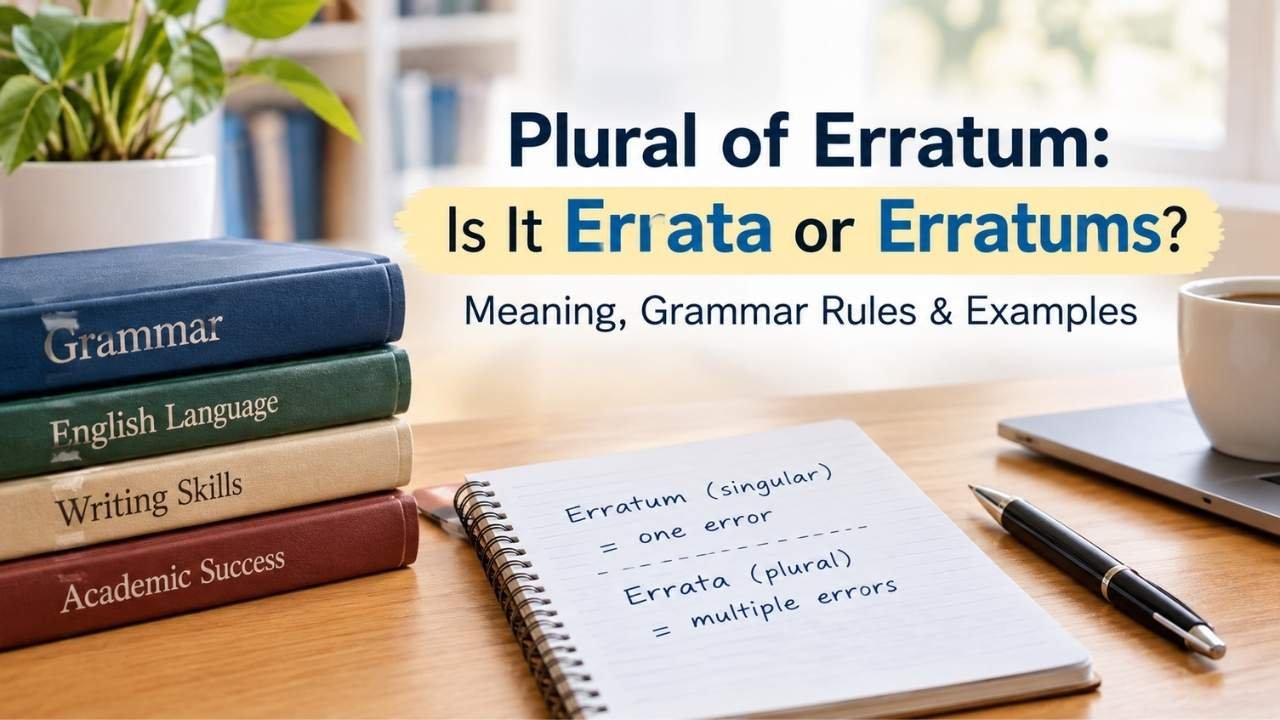
Have you ever wondered whether the plural of erratum is errata or erratums? You’re not alone. This question often comes up in English grammar, especially for students, writers, editors, and researchers who work with academic writing or published documents.
While erratum refers to a single mistake, its plural form follows a unique Latin plural rule that can confuse many English learners. Understanding the difference between erratum and errata will help you use both words correctly in formal and professional writing.
In this guide, you’ll learn the erratum meaning, why errata is the accepted plural, whether erratums is ever correct, and how to use these terms with confidence. You’ll also find simple explanations, helpful examples, and common grammar tips to avoid mistakes.
Quick Answer
The plural of erratum is errata. An erratum is a single error or correction, while errata refers to multiple errors or a published list of corrections, especially in academic writing, books, and journals. Although erratums occasionally appears in informal usage, errata is the standard and widely accepted plural in modern English grammar and professional publishing.
What Does Erratum Mean?
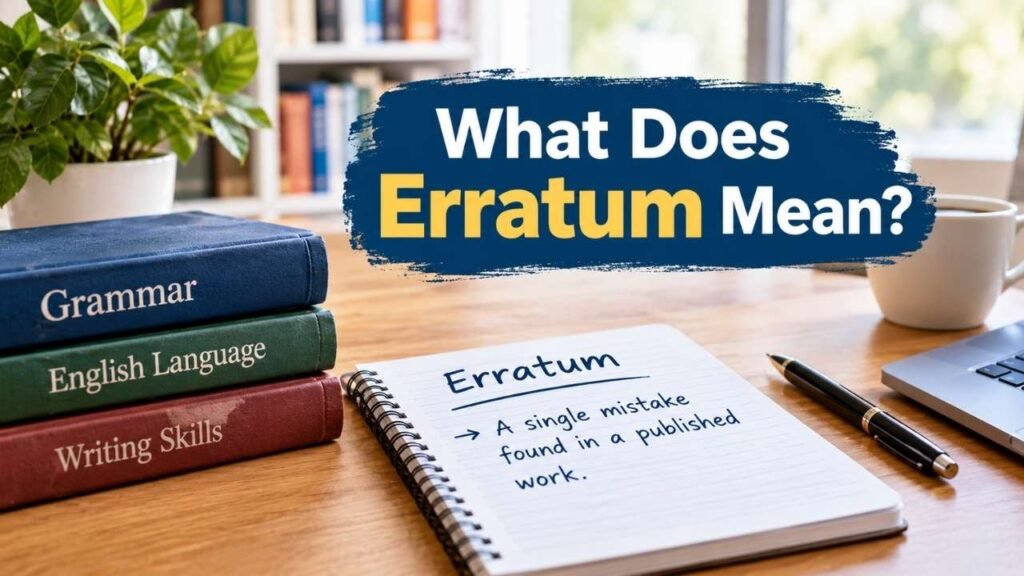
An erratum is a single mistake found in a printed or published work after it has already been released. The word comes from Latin and is commonly used in academic writing, research papers, books, and journals. Instead of reprinting an entire publication, publishers often issue an erratum to point out and correct the error.
The erratum meaning is simple—it refers to one correction for one error. You may also see an errata sheet included with textbooks or manuals to list corrections.
If you enjoy learning about grammar and spelling, you might also like our guide on Ageing or Aging, which explains another common language question. Knowing what erratum means makes it easier to understand its correct plural form.
What Is the Plural of Erratum?
The plural of erratum is errata. If there is only one mistake, use erratum. When there are two or more mistakes, use errata. This is the accepted form in English grammar, especially in academic publishing and formal writing.
Many dictionaries, editors, and style guides recognize errata as the standard plural because the word comes from Latin. Some people ask, “Is the plural of erratum errata or erratums?”
While erratums may appear occasionally, it is much less common and is generally avoided in professional writing. Just as you learn special plural forms in our Plural of Calculus guide, erratum follows its own grammar rule that is worth remembering.
Why Does Erratum Become Errata?
Many English words borrowed from Latin keep their original plural forms, and erratum is one of them. In Latin, some singular nouns ending in -um change to -a when they become plural. That is why erratum changes to errata instead of adding -s like most English nouns.
This is known as an irregular plural or a Latin plural. Although English has many regular plural nouns, some borrowed words continue to follow their traditional forms.
Learning this simple rule helps you understand not only the plural form of erratum but also other similar words. Once you know the pattern, remembering errata becomes much easier and more natural.
Erratum vs. Errata: What’s the Difference?
The difference between erratum and errata is based on number. Erratum is singular, while errata is plural. If a book contains one printing mistake, you would refer to it as an erratum. If it contains several mistakes that need correction, you would call them errata.
The meaning does not change—only the number does. In publishing, an errata page often lists every correction readers should know about. Using the correct form makes your writing clearer and more professional.
If you are ever unsure, remember this simple rule: one error equals erratum, while multiple errors equal errata. This distinction is important in formal and academic communication.
Is Erratums Ever Correct?
Some people wonder whether erratums is acceptable because many English nouns form their plurals by adding -s. While you may occasionally see erratums, it is not the preferred plural in formal writing, academic journals, or professional publishing.
The widely accepted plural is errata, and this is the form recommended by major dictionaries and style guides. In informal conversations, some speakers may choose erratums, but it can sound unusual to readers familiar with standard grammar.
If you are writing an essay, research paper, article, or official document, it is always safer to use errata. Choosing the standard form helps your writing appear accurate, polished, and grammatically correct.
How to Use Erratum and Errata Correctly
Using erratum and errata correctly is easier once you remember the difference between singular and plural. Use erratum when referring to one error that needs correction after publication. Use errata when talking about multiple errors or a complete list of corrections.
These words are most common in academic writing, textbooks, research journals, and official reports, but they may also appear in magazines and technical documents.
Before choosing either word, think about how many mistakes you are describing. If there is only one, write erratum. If there is more than one, use errata. Following this simple grammar rule will make your writing sound more natural, accurate, and professional.
Example Sentences Using Erratum and Errata
Seeing erratum and errata in real sentences is one of the easiest ways to remember how to use them. Use erratum when referring to one correction and errata when referring to several corrections. Here are a few examples:
- The publisher issued an erratum to correct a spelling mistake in the first edition.
- The journal released an errata page after readers found several errors.
- The editor added an erratum before printing the next copy.
- The book’s errata included corrections to page numbers and dates.
These examples show that the plural of erratum is errata, making it easier to choose the correct word in academic writing, books, and other formal publications.
Errata vs. Corrigenda: What’s the Difference?
Although errata and corrigenda both relate to corrections, they are not always used in the same way. Errata usually refers to printing mistakes, typing errors, or small factual errors discovered after publication.
Corrigenda, on the other hand, often refers to corrections that the author wants to make because of mistakes in the original content. In modern publishing, many organizations simply use errata for all types of corrections because it is more familiar to readers.
However, some academic journals still make a distinction between the two terms. Knowing the difference helps you understand publishing language and choose the right word when discussing corrections in books, journals, or research papers.
Common Mistakes People Make with Erratum
Many learners make small mistakes when using erratum and errata, but they are easy to avoid. The most common error is treating errata as a singular noun when it is actually plural. Another mistake is using erratums instead of the standard plural errata in formal writing.
Some writers also confuse errata with corrigenda, even though the terms can have different meanings. Others use erratum when talking about several corrections, which is incorrect.
The easiest way to remember the rule is simple: one correction is an erratum, while two or more corrections are errata. Keeping this rule in mind will improve your grammar and make your writing more accurate.
Similar Latin Plurals You Should Know
Erratum is not the only English word that keeps its original Latin plural. Many words borrowed from Latin follow similar grammar rules. Learning these examples makes it easier to understand irregular plural forms. Here are a few common ones:
- Bacterium → Bacteria
- Criterion → Criteria
- Datum → Data
- Medium → Media
- Memorandum → Memoranda
- Curriculum → Curricula
Like the plural of erratum, these words do not simply add -s. Instead, they follow traditional Latin patterns that are still widely accepted in English grammar. Recognizing these forms will strengthen your vocabulary and help you write more confidently in formal and academic settings.
FAQs
What is the plural of erratum?
The plural of erratum is errata, which is the standard form used in dictionaries, academic writing, and professional publishing.
Is it errata or erratums?
Errata is the preferred and widely accepted plural. Erratums appears occasionally but is uncommon in formal English.
What does erratum mean?
An erratum is a single mistake found in a published work that is corrected after publication.
What does errata mean?
Errata refers to multiple mistakes or a published list of corrections in books, journals, or other printed materials.
Is errata singular or plural?
Errata is a plural noun. The singular form is erratum.
Where is errata commonly used?
It is most often used in academic journals, books, research papers, manuals, and other professional publications.
Why is the plural errata instead of erratums?
Because erratum comes from Latin, it follows the traditional Latin plural rule, changing -um to -a.
Conclusion
The plural of erratum is errata, and it remains the standard choice in English grammar, academic writing, and professional publishing. While erratums may appear in rare informal situations, errata is the correct and widely accepted plural form.
Remember that erratum refers to one correction, while errata refers to multiple corrections or a list of published errors. Understanding this simple grammar rule will help you write with greater confidence and accuracy.
Whether you are preparing a research paper, editing a book, or improving your grammar skills, using erratum and errata correctly will make your writing clearer, more professional, and easier for readers to understand.