
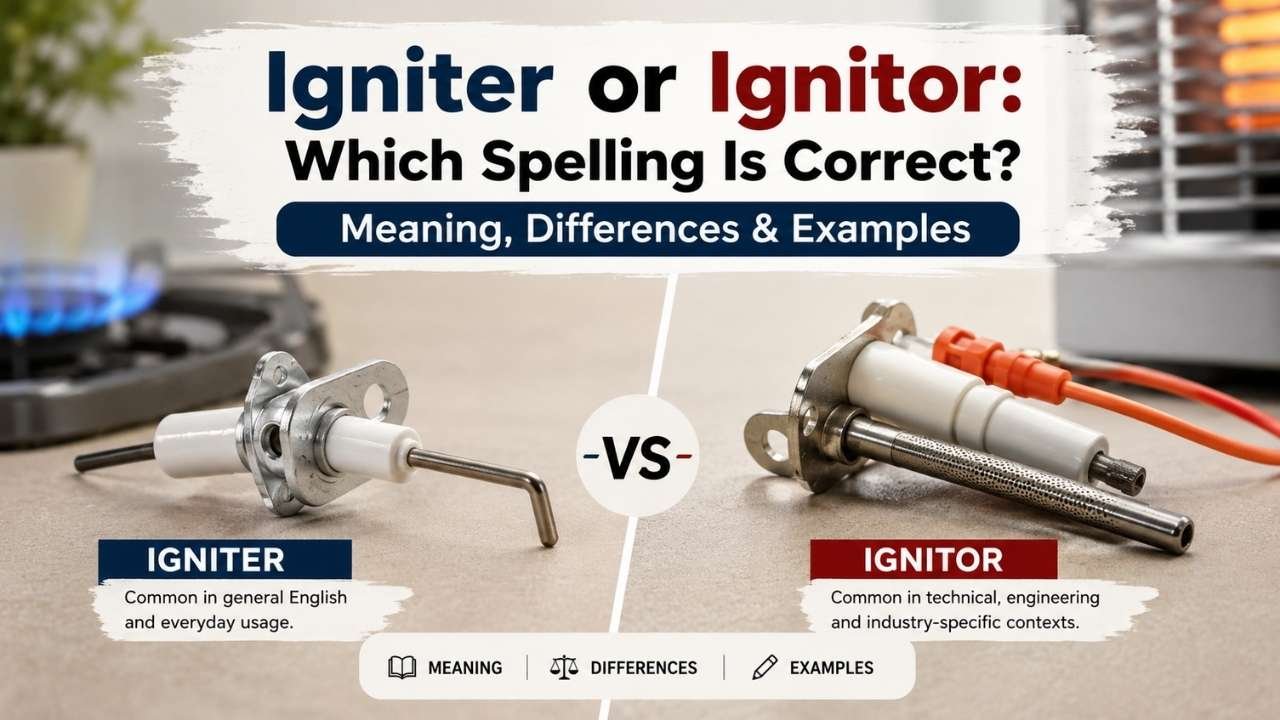
Have you ever wondered whether igniter or ignitor is the correct spelling? You’re not alone. Many people come across both words when reading about gas stoves, furnaces, grills, engines, or other ignition systems, making it easy to think one of them is a mistake. In reality, the answer is a little more interesting.
While igniter is the more common spelling in everyday English and appears in many dictionaries, ignitor is also an accepted spelling and is often used in technical, engineering, and manufacturing contexts.
Understanding the difference between igniter and ignitor helps you choose the right word for your audience and avoid common spelling confusion. In this guide, you’ll learn which spelling is correct, why both forms exist, where each is used, and see plenty of practical examples to make the choice simple.
Quick Answer
Both igniter and ignitor are correct spellings. Igniter is more common and preferred in general English, while ignitor is often used in technical, engineering, and product contexts. Both words refer to a device that starts combustion or ignition. For most everyday and academic writing, igniter is the safer choice.
What Does “Igniter” Mean?
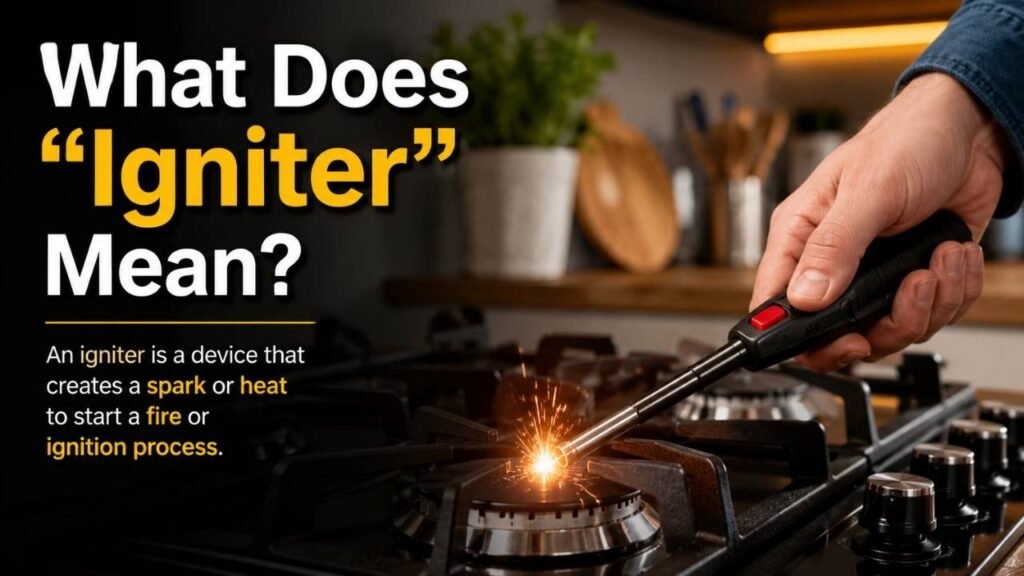
An igniter is a device that starts a fire, flame, or combustion process by creating a spark or heat. It is commonly found in gas stoves, furnaces, water heaters, barbecues, and many other appliances that need a reliable way to begin burning fuel.
In everyday English, igniter is the spelling most writers, dictionaries, and style guides prefer. If you’re comparing igniter or ignitor, this version is generally recommended unless you’re discussing a specific technical product.
Since igniter is widely recognized, it is the better choice for blogs, school assignments, and business writing. Just as choosing the correct spelling matters in articles like High Quality or High-Quality, selecting the right word improves clarity and professionalism.
What Does “Ignitor” Mean?
The word ignitor has the same basic meaning as igniter. It also refers to a device that starts an ignition system by producing heat, a spark, or another source of energy. The main difference is that ignitor appears more often in engineering, industrial manuals, and manufacturer product names.
For example, a company may sell a gas furnace ignitor or a surface ignitor because that spelling matches its branding or technical terminology. This does not mean ignitor is incorrect. Instead, it reflects industry preference in certain situations.
Similar usage differences appear in other grammar topics, such as Full Time or Full-Time, where the correct form depends on the context rather than one version always being wrong.
Igniter vs. Ignitor: What’s the Difference?
When comparing igniter vs. ignitor, the most important thing to know is that both words have the same meaning. They both describe an ignition device that starts a flame or combustion process.
The real difference is how they are used. Igniter is more common in general English, dictionaries, and everyday writing, while ignitor is often preferred in technical fields, engineering documents, and product labels.
If you’re writing for a broad audience, igniter is usually the better choice because readers recognize it more easily. If you’re referring to a specific product that uses ignitor in its official name, keep that spelling. Choosing the version that matches your audience helps make your writing clear and natural.
Which Spelling Is More Common?
If you search books, websites, and dictionaries, you’ll quickly notice that igniter appears much more often than ignitor. Most general English dictionaries list igniter as the primary spelling, and many writers naturally choose it because it looks familiar.
This makes igniter the preferred option for articles, reports, blogs, and everyday communication. However, ignitor is still widely used in technical industries, especially in manuals for gas appliances, burners, automotive parts, and heating systems.
Because of this, neither spelling is considered wrong. The better choice depends on what you are writing and who will read it. For most people, igniter remains the safer and more widely accepted spelling.
Why Do Both Spellings Exist?
The reason we have both igniter and ignitor is that English has changed over time, and technical fields sometimes develop their own preferred terms. The word comes from the verb ignite, which means to start burning.
From that base, different noun endings became accepted. In everyday English, igniter became more common because it follows the same pattern as words like writer and printer. Meanwhile, engineers and manufacturers often adopted ignitor in product names and technical documents.
As a result, both spellings continue to exist today. If you’re asking why there are two spellings, the answer is simple: language evolves, and industries sometimes keep different forms that become widely recognized and accepted.
Is “Ignitor” Incorrect?
Many people ask, “Is ignitor a correct spelling?” The answer is no, it is not incorrect. Although igniter is the spelling most people see in dictionaries and general writing, ignitor is also recognized and used correctly in many technical situations.
It often appears in product manuals, engineering guides, and the names of replacement parts for furnaces, grills, and other heating equipment. Because of this, you should not automatically change ignitor to igniter, especially if it is part of an official product name.
For general articles, school work, or business communication, igniter is usually the better choice. In technical writing, however, using ignitor may be the more accurate option.
How Major Dictionaries Treat the Two Spellings
Major dictionaries generally recognize igniter as the standard spelling, while also acknowledging that ignitor is an accepted variant. For example, Merriam-Webster includes igniter as its main dictionary entry and notes ignitor as an alternative spelling.
Other respected dictionaries and language references also give preference to igniter because it is more common in everyday English. This does not mean ignitor is wrong. Instead, it shows that one spelling is more widely used in general communication.
When you are writing for a broad audience, following the dictionary-preferred spelling helps improve clarity. If you are quoting a product name or technical document, keep the original spelling to stay accurate and consistent.
Industry Usage: Why Manufacturers Often Use “Ignitor”
If you shop for replacement parts, you may notice that many companies label their products as ignitors instead of igniters. This is common in industries that make gas furnaces, water heaters, barbecue grills, boilers, and automotive ignition systems.
Manufacturers often continue using the spelling that has become standard within their industry or product line. In these cases, ignitor is simply a technical naming choice rather than a grammar rule.
When writing about a specific part, it is usually best to match the manufacturer’s official spelling. However, if you are creating a general grammar article or explaining the difference between igniter and ignitor, igniter is still the preferred spelling for most readers.
Examples of “Igniter” and “Ignitor” in Sentences
Seeing both words in context makes their usage much easier to understand. Here are a few examples:
- The igniter on the gas stove stopped working, so the burner would not light.
- The technician replaced the igniter in the furnace before winter.
- The service manual instructed the engineer to inspect the ignitor assembly.
- The replacement ignitor was designed for a specific heating system model.
- Always check whether the manufacturer uses igniter or ignitor before ordering a replacement part.
These examples show that both spellings describe the same type of ignition device, but the preferred word often depends on whether the writing is general or technical.
Common Mistakes to Avoid
One of the biggest mistakes is believing that only one spelling is correct. Both igniter and ignitor are accepted, but they are used in different situations. Another common mistake is changing the spelling of an official product name.
If a manufacturer sells an ignitor, you should keep that spelling instead of replacing it with igniter. Some writers also use the two forms randomly within the same article, which can confuse readers.
Choose one spelling for your main content and stay consistent unless you are discussing both versions. Finally, avoid assuming that ignitor is always a grammar error. Understanding the audience and context will help you choose the most appropriate spelling every time.
Should You Use “Igniter” or “Ignitor”?
For most people, igniter is the better choice because it is the more common spelling in dictionaries, books, websites, and everyday writing. It is ideal for blog posts, school assignments, business documents, and general communication.
Use ignitor when you are referring to a specific product, quoting a technical manual, or writing for an engineering audience where that spelling is standard. In other words, the best choice depends on your purpose.
If your goal is clear communication with a general audience, choose igniter. If accuracy requires matching technical terminology or a manufacturer’s wording, use ignitor. Understanding this simple difference will help you write with confidence.
FAQs
Is igniter the correct spelling?
Yes. Igniter is the preferred spelling in general English and is listed by major dictionaries.
Is ignitor also correct?
Yes. Ignitor is an accepted spelling and is common in technical and engineering contexts.
Do igniter and ignitor have different meanings?
No. Both words refer to the same type of ignition device.
Which spelling is more common?
Igniter is more common in everyday writing, while ignitor appears more often in technical documents and product names.
Should I use igniter in academic writing?
Yes. Igniter is usually the best choice for academic, business, and general writing unless you are quoting a technical source.
Why do manufacturers use ignitor?
Many manufacturers follow long-established industry terminology or branding, so they keep ignitor in product names.
Can I use both spellings in one article?
Yes, but only when comparing them. Otherwise, choose one spelling and stay consistent throughout your writing.
Conclusion
When comparing igniter or ignitor, the key point is that both spellings are correct. The difference is not in meaning but in usage. Igniter is the preferred spelling for everyday English, articles, and professional writing because it is more familiar to most readers and appears as the primary form in many dictionaries.
Ignitor, on the other hand, is widely accepted in technical writing, engineering, and manufacturer product names. If you are unsure which version to choose, igniter is the safest option for general audiences.
However, always use ignitor when referring to an official product or technical document that uses that spelling. Matching the context will make your writing accurate, natural, and easy to understand.