
Flounder vs Founder is a common confusion in English because these two words look and sound very similar. However, their meanings are quite different, and using the wrong word can change the message of your sentence.
Flounder usually means to struggle, have difficulty, or make little progress, while founder can mean to fail, collapse, or sink. It can also refer to a person who creates or establishes a company or organization.
Understanding the difference between flounder and founder helps you use these words correctly in writing and conversation. In this guide, we will explain their meanings, pronunciation, examples, and usage rules so you can easily know when to use flounder vs founder.
Quick Answer
Flounder means to struggle, experience difficulty, or fail to make progress, while founder means to fail, collapse, or sink. Founder can also describe a person who creates a company or organization. Although these words sound similar, they have different meanings and uses. Choosing the correct word depends on the context of your sentence.
Flounder vs Founder: Quick Difference at a Glance
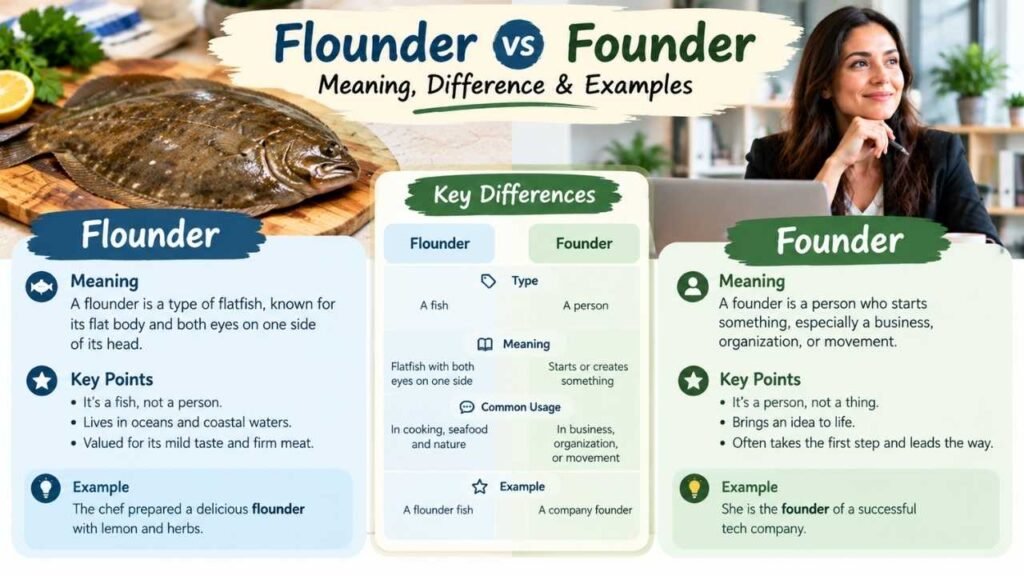
Flounder and founder are commonly confused words because they have similar spellings and pronunciations. However, their meanings are different. Flounder means to struggle, face difficulty, or fail to make steady progress. It can describe a person, a plan, or even movement in water.
On the other hand, founder means to fail, collapse, or sink when used as a verb. It can also mean a person who creates or starts something, such as a company founder. Understanding the difference between flounder and founder helps you avoid common English vocabulary mistakes. Although both words can relate to problems, flounder focuses on struggle, while founder focuses on failure or collapse.
What Does Flounder Mean?
The word flounder has two main meanings in English. As a verb, it means to struggle, feel confused, or have difficulty making progress. For example, a student may flounder during a challenging exam because they do not understand the questions. A business or project can also flounder when it lacks direction or support.
As a noun, a flounder is a type of flatfish that lives in water. The fish meaning is different from the action of struggling, but both meanings are important to understand. Learning the flounder definition and flounder meaning makes it easier to recognize how this word works in different situations.
How to Use Flounder in a Sentence
You can use flounder when someone or something is struggling without making good progress. It often describes situations where there is confusion, uncertainty, or difficulty. For example, “The new employee began to flounder because the instructions were unclear.” You can also use it for organizations, plans, or teams that are having problems. Another example is, “The
project started to flounder after the manager left.” When describing movement, flounder can mean moving in an awkward or uncontrolled way, such as “The swimmer floundered in the deep water.” Understanding these examples helps you use flounder in a sentence correctly and avoid confusing it with founder.
What Does Founder Mean?
The word founder has two different meanings, which can sometimes confuse English learners. As a noun, a founder is a person who creates or establishes something, such as a company, organization, or movement.
For example, “She is the founder of a successful technology company.” As a verb, founder means to fail, collapse, or stop working successfully. For example, “The business foundered because of poor financial decisions.”
Unlike flounder, which describes struggling, founder usually suggests that something has reached failure. Understanding the founder meaning and founder definition is important for correct writing. Similar word confusion can also happen with terms like Center vs Centre and Center vs Centre, where small spelling differences affect usage.
How to Use Founder in a Sentence
You can use founder in two different ways depending on the meaning you want to express. When founder is a noun, it refers to someone who creates or starts something. For example, “The founder of the company introduced a new product.”
This meaning is common in business, where people often talk about startup founders or organization founders. When founder is a verb, it means to fail, collapse, or stop being successful.
For example, “The plan foundered because there was not enough support.” Learning how to use founder in a sentence correctly helps prevent confusion between flounder and founder. Always check the context before choosing the right word.
Flounder vs Founder: Key Differences Explained
The main difference between flounder and founder is the type of problem each word describes. Flounder means someone or something is struggling but may still continue. It shows difficulty, confusion, or a lack of progress.
For example, a person can flounder while learning a new skill. Founder, when used as a verb, means something fails completely or stops working. A business, plan, or ship can founder when it collapses.
However, founder also has a positive meaning when it refers to a person who creates something. Remember: flounder = struggle, while founder = fail or create. This simple difference makes it easier to choose the correct word.
Flounder vs Founder Pronunciation: Are They Different?
Many people confuse flounder and founder pronunciation because the words look almost the same. However, they are pronounced differently. Flounder is pronounced like “FLOUN-der,” while founder is pronounced like “FOUN-der.”
The main difference is the extra “l” sound in flounder. Even though the pronunciation difference is small, it changes the meaning completely. Knowing the pronunciation difference between flounder and founder can help you speak and write more accurately.
If you are learning English, listening carefully to these sounds can prevent mistakes. Similar-looking words often create confusion, but understanding their sounds and meanings makes vocabulary easier to remember.
Can a Ship Flounder or Founder?
The question “Can a ship flounder or founder?” is a common one because both words have been used when talking about ships. A ship can founder, which means it sinks or fails completely. For example, “The ship foundered during the storm.”
A ship can also flounder when it struggles or moves with difficulty, but it does not necessarily sink. This difference is important because founder suggests a final failure, while flounder suggests difficulty or trouble.
The phrase ship flounder vs founder shows how context changes meaning. Understanding these uses helps writers choose the right word when describing accidents, struggles, or failures.
Why Are Flounder and Founder Often Confused?
The reason flounder and founder are often confused is because they have similar spelling, pronunciation, and ideas connected to difficulty. Both words can describe situations where something is not going well, which makes them easy to mix up.
However, they describe different stages of a problem. Someone who is floundering is struggling and trying to improve, while something that has foundered has already failed or collapsed. This confusion is common among English learners and writers.
Learning the difference between these commonly confused words helps improve vocabulary and writing accuracy. Remembering the main idea behind each word is the easiest way to avoid mistakes.
Flounder vs Founder: Common Mistakes to Avoid
Many people use flounder and founder incorrectly because they focus only on their similar sounds. One common mistake is using flounder when talking about complete failure. For example:
❌ The company floundered and closed forever.
✅ The company foundered and closed forever.
Another mistake is using founder when describing someone who is struggling:
❌ The student founded during the difficult exam.
✅ The student floundered during the difficult exam.
A useful rule is that flounder describes struggle, while founder describes failure or collapse. Checking the meaning before using the word will help you write clearer sentences and avoid common English vocabulary mistakes.
Easy Memory Trick to Remember Flounder vs Founder
A simple way to remember the difference between flounder vs founder is to connect each word with its main idea.
Think of flounder as “struggle.” If someone is confused, stuck, or having trouble making progress, they are floundering. Think of founder as “failure.” If a business, plan, or ship breaks down completely, it has foundered.
You can also remember that a founder can be a person who starts something new, such as a company founder. These simple connections make it easier to remember the correct usage. With practice, choosing between flounder and founder becomes natural in both speaking and writing.
FAQs
What is the difference between flounder and founder?
Flounder means to struggle, while founder means to fail, collapse, or create something.
Can a business flounder?
Yes, a business can flounder when it struggles but has not completely failed.
Can a business founder?
Yes, a business can founder when it collapses or fails.
Is founder always related to a company?
No. Founder can also be a verb meaning failure.
Are flounder and founder pronounced the same?
No. Flounder has an extra “l” sound.
Can a ship flounder or founder?
A ship can founder when it sinks and flounder when it struggles.
Conclusion
Understanding the difference between flounder vs founder helps you use these confusing English words correctly. Flounder means to struggle, experience difficulty, or make slow progress.
Founder can mean to fail, collapse, or sink, and it can also describe a person who creates something. Although these words look similar, their meanings are not the same.
Remembering the simple rule — flounder means struggle, founder means failure or creator — makes it easier to choose the right word. Whether you are writing an article, email, or everyday sentence, using the correct term improves clarity and accuracy.