
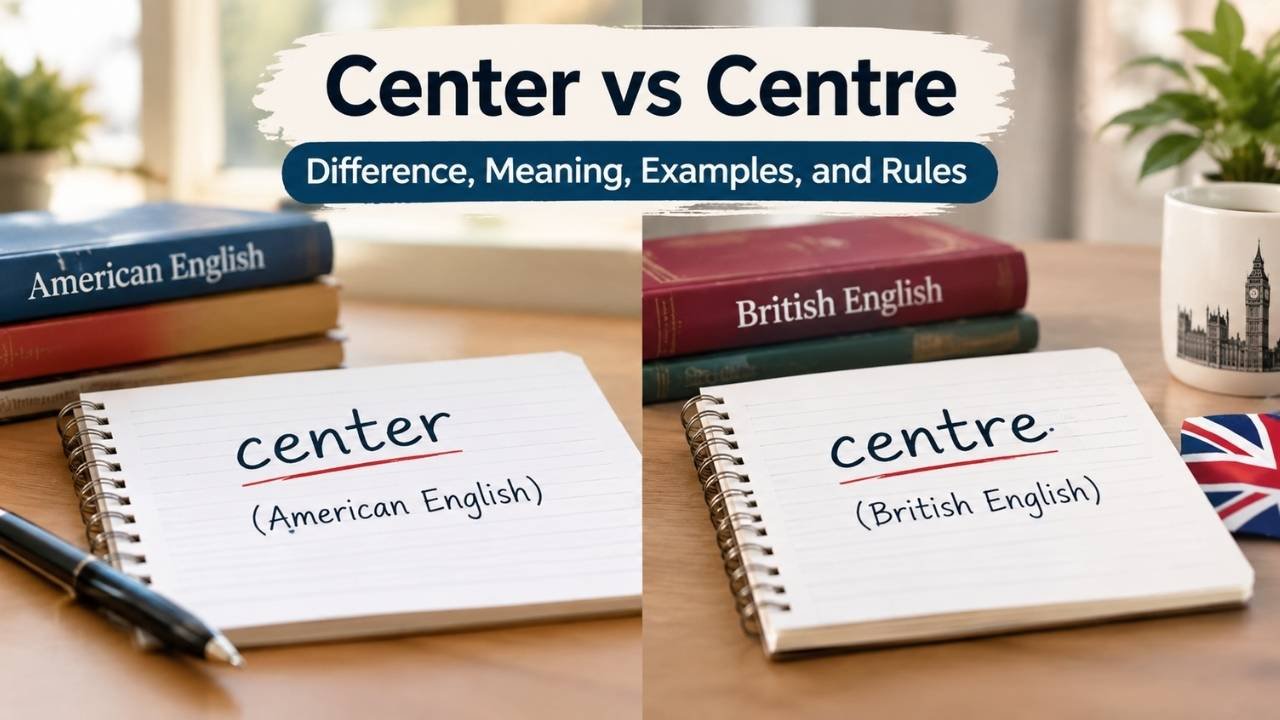
Have you ever wondered whether center and centre are different words or just different spellings? This common confusion happens because English has many regional variations. The words center vs centre have the same meaning, pronunciation, and usage, but the spelling depends on the type of English you follow.
Center is mainly used in American English, while centre is preferred in British English and many other English-speaking regions. In this guide, we will explain the difference between center and centre, their meanings, examples, spelling rules, and how to choose the correct form.
Whether you are a student, writer, or English learner, understanding this spelling difference will help you write more clearly and consistently.
Quick Answer
Center and centre are two spellings of the same word with the same meaning and pronunciation. The main difference is regional spelling: center is used in American English, while centre is commonly used in British English and other varieties. Both forms are correct, but writers should choose one style and use it consistently.
What Does Center Mean? Definition and Examples
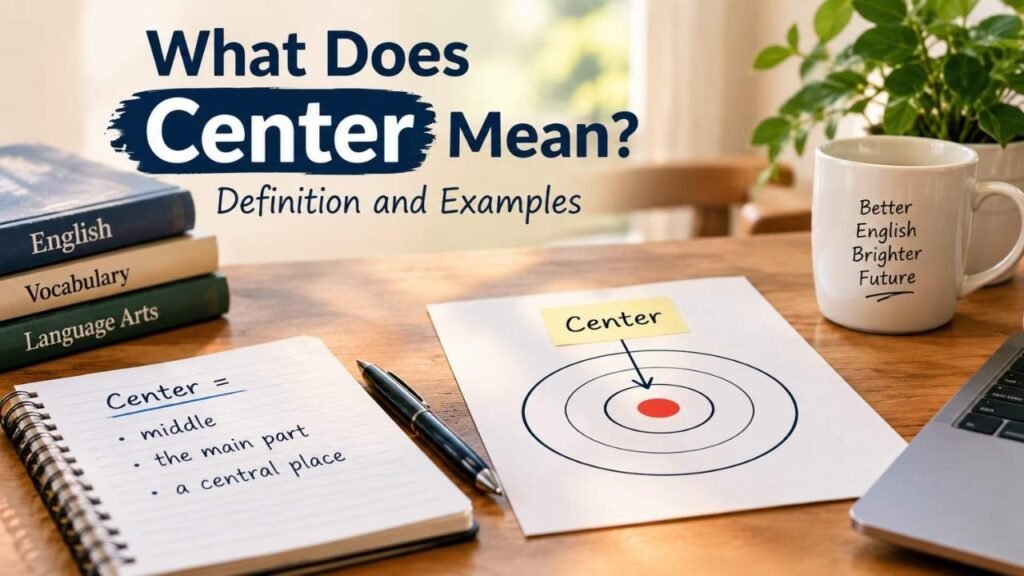
The word center means the middle point or the place that is equally far from all sides or edges. In American English, it is the preferred spelling of this word. A center can also describe a place or organization that provides a service, such as a shopping center or health center. It can be used as a verb too, meaning to focus something around a particular point.
For example, “The discussion centers on education” means the discussion focuses on education. Many writers use center in US English because it follows American spelling rules.
Understanding this meaning helps you recognize why center appears in many everyday phrases, academic texts, and professional writing materials. This knowledge is useful for students, bloggers, editors, and writers.
What Does Centre Mean? Definition and Examples
The word centre has the same meaning as center, but it is the common spelling in British English. It refers to the middle of something or a place created for a specific purpose. For example, a town centre is the main area of a town, while a sports centre is a place for activities.
The spelling centre is also used in countries that often follow British English rules, such as the UK and Australia. Although the spelling changes, the pronunciation and meaning stay the same.
Learning this difference can improve your writing accuracy and help you understand regional spelling choices. This is similar to other English differences, such as Conjunction vs Contraction, where small changes can affect how words are understood.
Center vs Centre: Key Differences at a Glance
The main difference between center and centre is not their meaning but their spelling style. Both words refer to the middle point, a location, or a focus of attention. The spelling center is mainly used in American English, while centre is mainly used in British English.
Their related forms also change depending on the variety of English. For example, Americans write centered and centering, while British writers often use centred and centring. Choosing the correct form depends on your audience and writing style.
If you are creating content for an international audience, it is important to stay consistent. Mixing both forms in the same article can make your writing look less professional. This simple rule prevents common spelling mistakes in writing.
Why Are Center and Centre Spelled Differently?
The spelling difference between center and centre developed because American and British English followed different language patterns over time. British English kept the spelling influenced by French, while American English often simplified certain spellings. Today, both forms are accepted and considered correct in their own regions.
Many learners also compare these differences with other confusing English topics, such as Much vs Many, where choosing the correct word depends on usage rules. The best approach is to understand your audience before writing. If you write for American readers, use center. If you write for British readers, use centre.
Consistent spelling makes your writing clearer and easier for readers to follow. This simple habit helps readers recognize your preferred English style without confusion.
Center vs Centre in American and British English
The choice between center and centre mainly depends on the type of English being used. In American English, center is the standard spelling for both nouns and verbs. For example, Americans write “shopping center” and “the research centers on technology.”
In British English, centre is preferred, such as “shopping centre” and “the research centres on technology.” Other English varieties, including Australian English and often Canadian English, commonly use the British spelling centre.
However, some Canadian writers may use American spelling depending on their audience or style guide. There is no difference in meaning between these forms. The important rule is to choose one spelling style and use it consistently throughout your writing.
Are Center and Centre Pronounced Differently?
Many learners wonder if center and centre pronunciation changes because the spelling is different. The answer is no. Both words are pronounced the same way in English. The difference only appears in writing, not in speech.
Whether you use center in American English or centre in British English, listeners will understand the word in the same way. This is an important point because some people think one spelling represents a different word or meaning.
However, both forms describe the middle point, a location, or a main focus. When speaking, you do not need to worry about choosing between them. The spelling choice only matters when you are writing for a specific audience, region, or publication style.
Center and Centre as Nouns and Verbs
Both center and centre can work as nouns and verbs, which makes them useful in many types of writing. As nouns, they describe a middle point or a place. For example, “The park is in the city center” and “The community centre is nearby” show location. As verbs, they mean to focus attention on something.
For example, American English uses “The story centers on family,” while British English uses “The story centres on family.”
The meaning remains unchanged in both versions. Understanding both uses helps writers avoid mistakes because many people only learn the noun form. Whether you write an article, essay, or report, knowing how these words function makes your English more accurate and natural.
Centered vs Centred: Which Spelling Is Correct?
The words centered and centred follow the same spelling difference as center and centre. Both are correct, but the choice depends on regional English. Centered is the preferred spelling in American English, while centred is commonly used in British English.
For example, an American writer may say, “The image is centered on the page,” while a British writer may write, “The image is centred on the page.” The meaning is exactly the same. The same rule applies when adding endings to words.
If you choose American spelling, continue using American forms throughout your content. If you follow British spelling, keep British forms consistent. This helps your writing appear professional and avoids unnecessary confusion.
Centering vs Centring: Difference Explained
The difference between centering and centring follows the same pattern as other US vs UK spelling differences. The American spelling uses centering, while British English uses centring. Both words mean placing something in the middle or focusing attention on a particular subject.
For example, “The designer is centering the image” and “The designer is centring the image” have the same meaning. Many English learners find these spelling changes confusing because only one letter is different.
However, the rule is simple: American English usually keeps the letter e, while British English may remove it before adding endings like -ing. Understanding these small spelling patterns can improve your writing and help you recognize different English styles.
Common Phrases Using Center and Centre
Many everyday phrases use center or centre, and the spelling changes depending on the English variety. In American English, common phrases include city center, shopping center, community center, and center point.
In British English, these are usually written as city centre, shopping centre, community centre, and centre point. These phrases have the same meaning but follow different spelling traditions. For example, “I visited the shopping center” and “I visited the shopping centre” both describe the same place.
Learning these common combinations makes it easier to identify regional spelling. Instead of memorizing every phrase separately, remember that the main difference is based on whether you are following American or British English rules.
Common Mistakes When Using Center and Centre
One of the most common mistakes with center vs centre is mixing American and British spelling styles in the same piece of writing. For example, using center in one paragraph and centred in another can make your content look inconsistent.
While neither spelling is wrong, combining different styles may confuse readers. Another mistake is thinking that centre and center have different meanings. They are simply spelling variations of the same word.
Writers should always consider their target audience before choosing a form. If you are writing for a US-based website, use American spelling. If your readers follow British English, use British spelling. Maintaining consistency is the easiest way to create clear and professional content.
How to Choose Between Center and Centre in Your Writing
Choosing between center and centre becomes simple when you know your audience. If you are writing for readers in the United States, use center, centered, and centering. If your audience mainly uses British English, choose centre, centred, and centring.
For academic writing, professional documents, or online content, always check the required style guide before publishing. Some organizations have their own spelling preferences, especially international companies and educational platforms. The most important rule is consistency.
Do not switch between American and British spelling styles without a reason. A consistent writing style improves readability and makes your content look more polished. Choosing the correct form is not about right or wrong English; it is about using the appropriate regional style.
FAQs
Is center or centre correct?
Both center and centre are correct. The correct choice depends on whether you use American or British English.
Is centre British spelling?
Yes. Centre is the preferred spelling in British English and many other English varieties.
Is center American spelling?
Yes. Center is the standard spelling used in American English.
Are center and centre the same word?
Yes. They have the same meaning, pronunciation, and grammatical uses.
Does pronunciation change between center and centre?
No. Both words are pronounced the same.
Which spelling should I use in academic writing?
Use the spelling style required by your institution, journal, or style guide.
Does Canada use center or centre?
Canadian English often uses centre, although some writers may follow American spelling rules.
Conclusion
The difference between center and centre is only a matter of spelling, not meaning. Both words describe the middle point, a location, or a main focus. The spelling center is mainly used in American English, while centre is preferred in British English and many other English-speaking regions.
Their related forms, including centered vs centred and centering vs centring, follow the same regional rules. When writing, the best choice depends on your audience, location, and style requirements.
The most important thing is to stay consistent throughout your content. By understanding these simple differences, you can use center or centre confidently in everyday conversations, academic writing, and professional communication.