
Have you ever noticed how some words sound more powerful, memorable, or musical when they are placed together? Writers often use sound devices like alliteration vs assonance to create rhythm, emotion, and emphasis in their writing.
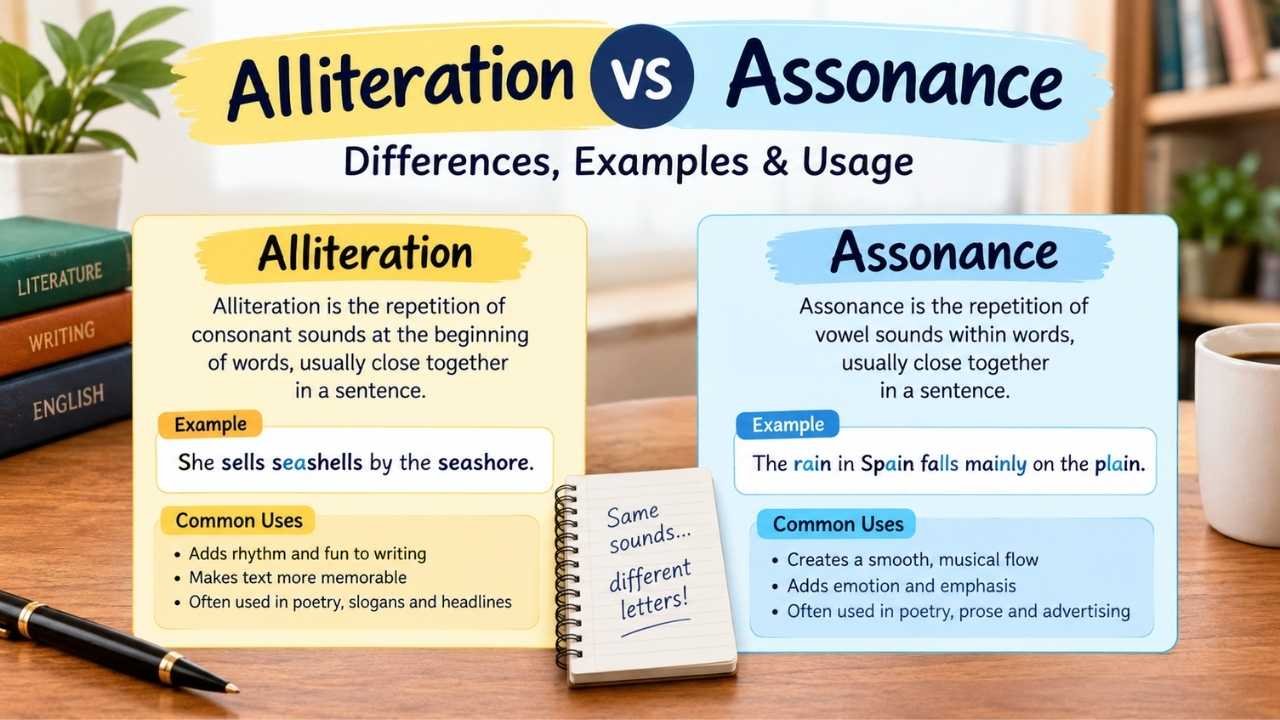
Although these two literary devices may seem similar, they work in different ways. Alliteration focuses on repeated consonant sounds, while assonance uses repeated vowel sounds within nearby words.
Understanding the difference between alliteration vs assonance can help you analyze poetry, improve creative writing, and recognize how language creates impact. In this guide, you will learn the definitions, differences, examples, and uses of both techniques in a simple way.
Quick Answer
Alliteration and assonance are both literary devices that use repeated sounds, but they focus on different sounds. Alliteration is the repetition of consonant sounds, usually at the beginning of nearby words, while assonance is the repetition of vowel sounds within words. Writers use both techniques to create rhythm, mood, and emphasis.
What Is Alliteration? Definition, Meaning, and Examples
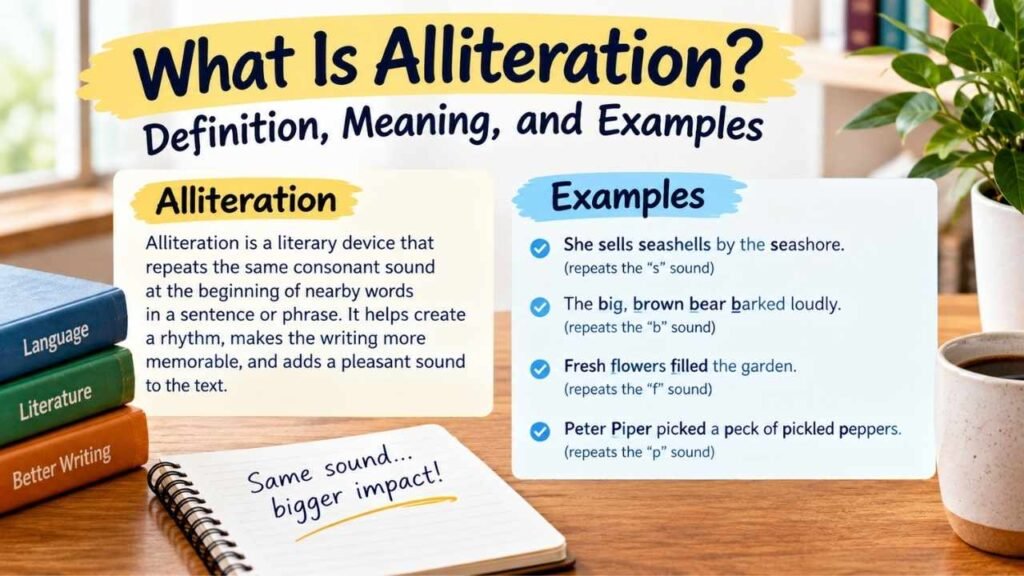
Alliteration is a literary device where the same consonant sound is repeated at the beginning of two or more nearby words. It is one of the most common sound devices in poetry and is also used in stories, advertisements, brand names, and everyday phrases. The repeated sound creates a musical effect and makes phrases easier to remember.
For example, in the sentence “She sells seashells by the seashore,” the repeated “s” sound creates alliteration. It is important to remember that alliteration focuses on the sound, not only the written letter.
Words with different spellings can still create alliteration if they have the same beginning sound. Writers use this technique to add rhythm, emotion, and emphasis to their words.
What Is Assonance? Definition, Meaning, and Examples
Assonance is a sound device that involves the repetition of similar vowel sounds in nearby words. Unlike alliteration, which usually appears at the beginning of words, assonance can happen anywhere within a word. Writers use this technique to create a smooth flow, musical quality, or specific mood in their writing.
For example, the phrase “The light of the fire shines bright” repeats the long “i” vowel sound, creating assonance. This technique is often found in poetry, songs, and creative writing because repeated vowel sounds can make language more expressive.
Understanding assonance definition and examples helps readers recognize how writers use sound patterns to influence emotions and improve the overall effect of a sentence or poem.
Alliteration vs Assonance: Key Differences Explained
The main difference between alliteration and assonance is the type of sound being repeated. Alliteration focuses on repeated consonant sounds, while assonance focuses on repeated vowel sounds. Both techniques are forms of repetition of sounds, but they create different effects in writing.
| Feature | Alliteration | Assonance |
| Meaning | Repetition of consonant sounds | Repetition of vowel sounds |
| Main Focus | Beginning consonant sounds | Repeated vowel sounds |
| Common Use | Poetry, slogans, names | Poetry, songs, creative writing |
| Example | “Wild winds whistle” | “Go slow over the road” |
Knowing the difference between alliteration vs assonance makes it easier to analyze poems and understand how writers create rhythm, emotion, and memorable expressions.
Similarities Between Alliteration and Assonance
Although alliteration and assonance are different sound devices, they share several similarities. Both are literary devices that use repeated sounds to make writing more interesting and effective. They can improve the rhythm of a sentence, create a musical effect, and help readers remember important phrases.
Both techniques are commonly used in poetry, songs, storytelling, and creative writing. Writers choose these methods to create a certain feeling or highlight specific words. For example, a writer may use repeated sounds to make a phrase feel calm, exciting, or dramatic.
Whether a writer uses repeated consonant sounds through alliteration or repeated vowel sounds through assonance, the goal is often the same: to make language more powerful and engaging.
Alliteration vs Assonance vs Consonance: Understanding the Difference
Many readers confuse alliteration, assonance, and consonance because all three are related to sound repetition. However, each literary device works differently. Alliteration repeats consonant sounds, usually at the beginning of words. Assonance repeats vowel sounds within words. Consonance repeats consonant sounds anywhere in words, not just at the beginning.
For example:
- Alliteration: “Big brown bears” (repeated b sound)
- Assonance: “The slow road home” (repeated o sound)
- Consonance: “Stroke of luck” (repeated k sound)
Understanding these differences helps readers identify various sound devices in poetry and improves their ability to analyze writing. These concepts are useful when exploring topics like Flounder vs Founder, where small sound differences can change meaning.
How to Identify Alliteration and Assonance in Writing
Identifying alliteration and assonance becomes easier when you focus on the sounds instead of just the spelling. To find alliteration, look for nearby words that begin with the same consonant sound. For example, “Funny friendly frogs” repeats the f sound.
To identify assonance, listen for repeated vowel sounds within words. For example, “The green leaves” repeats a similar long e sound. A helpful method is to read the sentence aloud because sound repetition is easier to notice when spoken.
Learning how to identify alliteration and assonance helps students understand poetry techniques and improves writing skills. Similar sound-based differences can also appear in language topics like Center vs Centre, where small details affect correct usage.
Examples of Alliteration and Assonance in Poetry and Literature
Examples are one of the easiest ways to understand the difference between alliteration and assonance. Writers have used these sound devices in poetry and literature for centuries to make their words more memorable.
A common example of alliteration is “Peter Piper picked a peck of peppers,” where the repeated “p” consonant sound creates a strong rhythm. An example of assonance is “The cat sat back,” where the repeated short “a” vowel sound creates a smooth pattern. These techniques are also found in songs, stories, and advertisements. By studying different alliteration examples and assonance examples, readers can better understand how sound repetition adds beauty, emotion, and meaning to writing.
Why Do Writers Use Alliteration and Assonance?
Writers use alliteration and assonance because repeated sounds can make language more powerful and enjoyable to read. These literary devices help create rhythm, improve the flow of sentences, and make certain words stand out. In poetry, repeated sounds can help create a specific mood, such as excitement, calmness, or sadness.
Alliteration is often used to make phrases catchy and memorable, which is why it appears in brand names, slogans, and headlines. Assonance helps writers create a musical effect by repeating vowel sounds throughout a sentence or poem.
Both techniques are valuable writing techniques because they add style without changing the meaning of the words. Understanding these sound patterns helps writers communicate ideas in a more creative and engaging way.
Can a Sentence Have Both Alliteration and Assonance?
Yes, a sentence can contain both alliteration and assonance at the same time. Although these sound devices have different purposes, writers often combine them to create stronger effects. A sentence may repeat consonant sounds at the beginning of words while also including repeated vowel sounds inside those words.
For example:
“Bright birds bring beautiful melodies.”
This sentence uses alliteration because of the repeated “b” sound at the beginning of several words. It also contains assonance because of repeated vowel sounds in words like “bright” and “beautiful.” Using both techniques together can make writing more rhythmic and expressive. Learning that these devices can work together helps readers better analyze poetry techniques and understand how authors create memorable language.
Common Mistakes When Confusing Alliteration and Assonance
Many people confuse alliteration vs assonance because both involve the repetition of sounds. However, the main mistake is focusing only on letters instead of pronunciation. Alliteration is about repeated consonant sounds, usually at the beginning of nearby words. Assonance is about repeated vowel sounds that can appear anywhere within words.
Another common mistake is thinking that every repeated sound is alliteration. For example, repeated vowel sounds are not alliteration; they are usually examples of assonance. It is also important to remember that spelling does not always determine sound. Two words can look different but still create the same sound pattern. Understanding these differences makes it easier to recognize literary devices and correctly analyze writing.
FAQs
What is the main difference between alliteration and assonance?
The main difference is the type of sound repeated. Alliteration repeats consonant sounds, while assonance repeats vowel sounds.
Is alliteration a type of assonance?
No. Both are sound devices, but they focus on different sounds. Alliteration uses consonants, while assonance uses vowels.
What is an example of alliteration?
An example of alliteration is “Sally sells seashells by the seashore.” The repeated “s” sound creates alliteration.
What is an example of assonance?
An example of assonance is “The rain in Spain stays mainly in the plain.” The repeated “ai” vowel sound creates assonance.
Can alliteration and assonance be used together?
Yes. Writers often combine both techniques to create stronger rhythm and musical effects.
Are alliteration and assonance only used in poetry?
No. They are also used in songs, advertisements, speeches, stories, and everyday expressions.
Why do writers use sound devices?
Writers use sound devices to make their writing more memorable, emotional, and interesting.
Conclusion
Understanding alliteration vs assonance becomes easier when you remember their main difference. Alliteration focuses on repeated consonant sounds, usually at the beginning of nearby words, while assonance focuses on repeated vowel sounds within words. Both are important literary devices that help writers create rhythm, emotion, and emphasis.
By learning their definitions, examples, and identification methods, readers can better understand poetry, songs, and creative writing. These techniques show how small sound changes can create a powerful effect on an audience.
Whether you are studying literature or improving your own writing, recognizing alliteration and assonance will help you appreciate how language can be used in a more creative and meaningful way.