
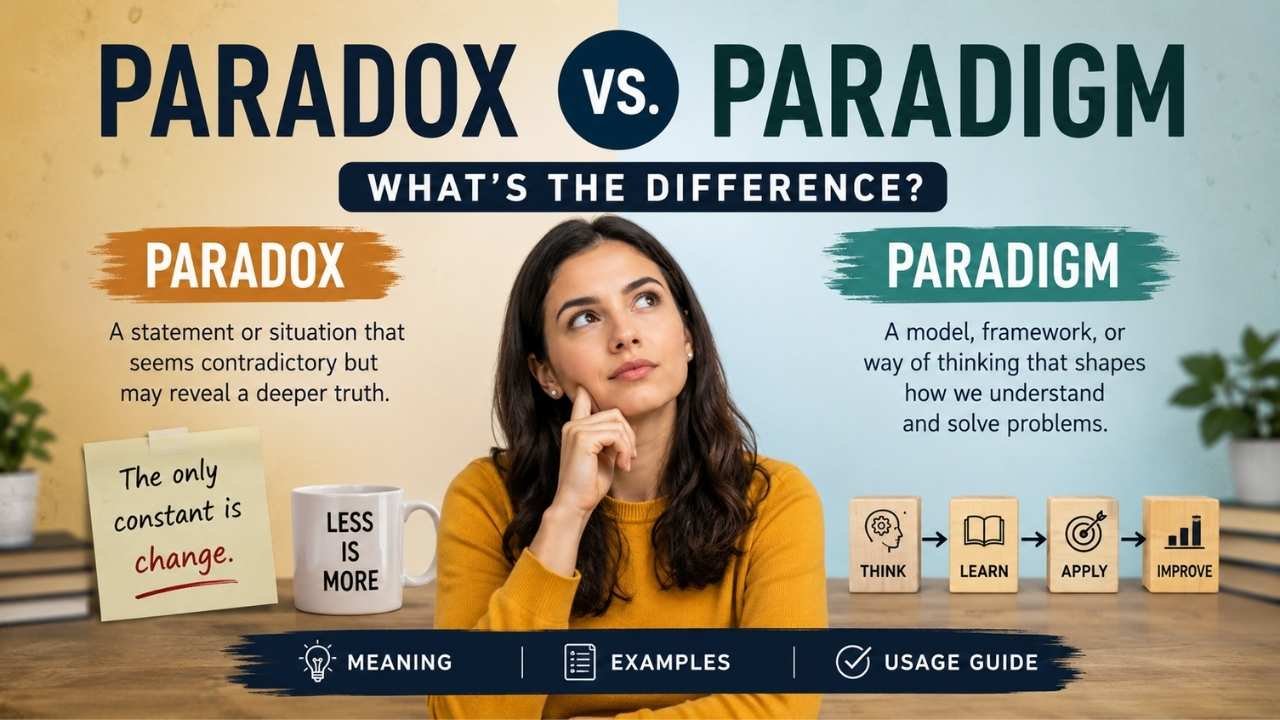
Have you ever wondered why juxtaposition and paradox seem so similar but actually mean different things? Many students, writers, and English learners confuse these literary devices because both involve contrast and make readers think more deeply. However, they work in very different ways.
Juxtaposition places two ideas, characters, or images side by side to highlight their differences or similarities, while a paradox is a statement that appears to contradict itself but reveals a deeper truth. Knowing the difference between juxtaposition and paradox can improve your reading, writing, and literary analysis.
In this guide, you’ll discover simple definitions, clear examples, a detailed comparison, and practical tips to identify each device with confidence. By the end, you’ll know exactly when and how to use juxtaposition and paradox correctly in everyday writing and literature.
Quick Answer
Juxtaposition and paradox are both literary devices, but they work differently. Juxtaposition places two contrasting ideas, characters, or images side by side to highlight their differences or similarities. A paradox, however, is a statement that seems self-contradictory but reveals a deeper truth. In simple terms, juxtaposition compares through placement, while paradox creates meaning through apparent contradiction.
What Is Juxtaposition?
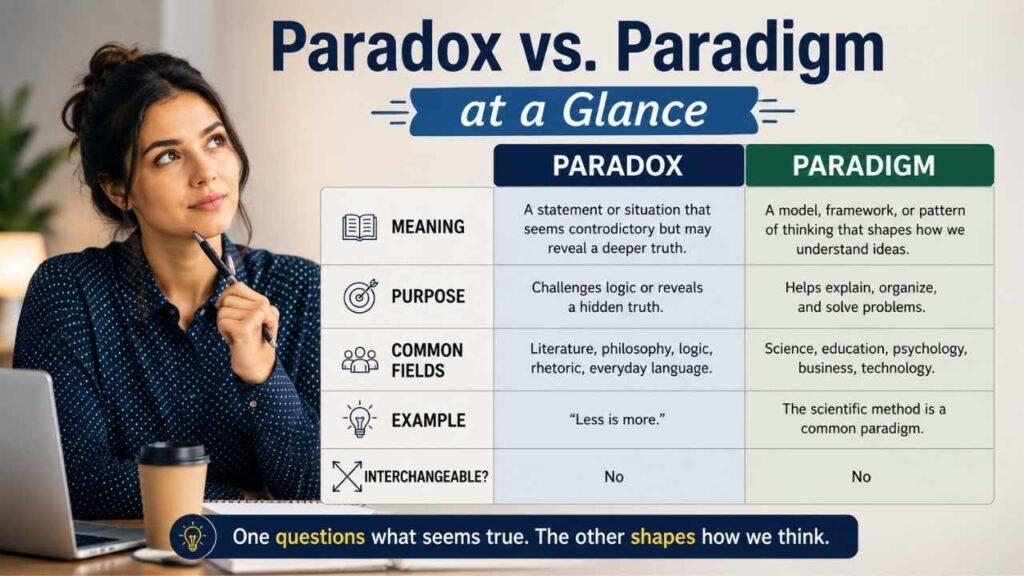
Juxtaposition is a literary device that places two people, ideas, objects, or situations side by side to highlight their differences or similarities. The goal is to make readers notice the contrast and understand each element more clearly.
Unlike a paradox, juxtaposition does not create a contradiction. Instead, it uses comparison through placement. For example, a story may describe a busy city next to a quiet village to show how different they are.
This technique appears in novels, poems, speeches, and even advertisements. If you enjoy learning about other figures of speech, you may also like our guide on Simile vs Metaphor, which explains another commonly confused pair of literary devices. Understanding juxtaposition helps improve both writing and literary analysis.
What Is a Paradox?
A paradox is a statement that seems impossible or self-contradictory at first but reveals a deeper truth when you think about it carefully. Instead of placing two things together, a paradox creates meaning through an apparent contradiction.
A famous example is, “Less is more.” Although the sentence sounds confusing, it suggests that simplicity can sometimes be more effective than excess. Writers use paradoxes to encourage readers to think beyond the obvious meaning. They are common in literature, philosophy, and everyday conversations.
Learning to recognize a paradox makes it easier to understand complex ideas and hidden messages. It also helps students answer questions about paradox vs juxtaposition with greater confidence.
Juxtaposition vs Paradox: Key Differences
Although juxtaposition and paradox both involve contrast, they work in completely different ways. Juxtaposition compares two separate ideas, characters, places, or objects by placing them close together.
A paradox, however, is a single statement that appears to contradict itself while expressing a deeper truth. For example, describing a cheerful child standing in a war zone is juxtaposition, while saying “The only constant is change” is a paradox. The table below highlights the main difference between juxtaposition and paradox.
| Feature | Juxtaposition | Paradox |
| Meaning | Places contrasting elements together | Uses an apparent contradiction |
| Purpose | Highlights similarities or differences | Reveals a deeper truth |
| Structure | Two ideas, images, or objects | One self-contradictory statement |
| Common Use | Literature, poetry, speeches | Literature, philosophy, everyday language |
Similarities Between Juxtaposition and Paradox
Even though juxtaposition and paradox are different literary devices, they share several similarities. Both encourage readers to think more deeply about the message instead of accepting the first meaning they see.
They often use contrast to create interest, strengthen ideas, and make writing more memorable. Authors, poets, and public speakers use both techniques to capture attention and communicate complex thoughts in a simple way. Because they both deal with opposing ideas, many learners mix them up.
The easiest way to remember the difference is that juxtaposition compares through placement, while paradox creates meaning through contradiction. If you’re exploring grammar topics as well, our article on the Plural of Bronchus explains another common point of confusion in English.
Examples of Juxtaposition vs Paradox in Literature
Many famous authors use juxtaposition and paradox to make their writing more meaningful. In Charles Dickens’ A Tale of Two Cities, the opening line, “It was the best of times, it was the worst of times,” combines both techniques.
The contrasting ideas placed together create juxtaposition, while the statement itself also suggests a deeper truth, making it feel paradoxical. Shakespeare often used paradoxes, such as “I must be cruel only to be kind,” to reveal complex emotions.
George Orwell also used contrasting characters and settings to strengthen themes in his novels. Studying these juxtaposition vs paradox examples helps readers understand how literary devices shape stories and leave a lasting impression.
Everyday Examples of Juxtaposition and Paradox
You can find juxtaposition and paradox outside books as well. Advertisements often place a luxury car beside a rough mountain road to highlight strength and elegance. This is juxtaposition because two different images are shown together.
A common paradox is “The more you learn, the less you realize you know.” It sounds contradictory but expresses an important truth about knowledge. Movies, social media posts, and speeches also use these techniques to attract attention and make ideas memorable.
Recognizing these examples in daily life makes it easier to understand the difference between juxtaposition and paradox. It also helps you use these literary devices naturally in your own writing.
How to Identify Juxtaposition and Paradox
Learning to identify juxtaposition and paradox becomes easier when you know what to look for. First, ask yourself whether the writer is placing two different ideas, people, images, or situations side by side. If yes, it is probably juxtaposition.
Next, check whether the sentence appears to contradict itself but still makes sense after thinking about it. If that is true, you are likely reading a paradox. A simple trick is to remember that juxtaposition compares, while paradox challenges your thinking through an apparent contradiction.
Reading different examples and practicing with short passages will help you recognize both devices quickly and improve your literary analysis skills.
Common Mistakes People Make
Many learners confuse juxtaposition and paradox because both involve opposing ideas. One common mistake is believing that every contrast is a paradox. In reality, juxtaposition simply places contrasting elements together without creating a contradiction.
Another mistake is thinking that every confusing statement is a paradox. A true paradox must reveal a deeper truth instead of being meaningless. Some people also confuse these devices with oxymorons, irony, or antithesis because they all deal with contrast in different ways.
Taking time to study definitions and examples can prevent these misunderstandings. Once you know how each device works, identifying them becomes much easier in both reading and writing.
Juxtaposition vs Other Literary Devices
Understanding juxtaposition vs paradox is easier when you compare them with similar literary devices. An oxymoron joins two contradictory words, such as “deafening silence,” while a paradox is usually a complete statement with a deeper meaning.
Antithesis places opposite ideas in balanced sentence structures to create emphasis, whereas juxtaposition simply places contrasting elements together. Irony happens when reality is different from what people expect, making it different from both juxtaposition and paradox.
Although these devices sometimes appear in the same passage, each has its own purpose. Learning these differences helps students, writers, and English learners choose the right literary device for clear and effective communication.
Can a Sentence Contain Both Juxtaposition and Paradox?
Yes, a sentence or passage can contain both juxtaposition and paradox. A writer may place two contrasting ideas side by side while also expressing a statement that appears contradictory but reveals a deeper truth.
For example, “In the middle of the noisy celebration, she found perfect silence.” The contrast between the celebration and silence creates juxtaposition, while the idea of finding silence in a loud place can also suggest a paradoxical meaning.
Skilled authors often combine these techniques to make readers think more carefully about a scene or message. Understanding how they work together shows that literary devices can support each other instead of existing separately.
Quick Practice Quiz
Test your understanding with these simple examples.
1. A poor house standing beside a grand palace.
2. “The only way to win is to surrender.”
3. A smiling child walking through a dark battlefield.
4. “The beginning of the end.”
5. A colorful garden beside a burned forest.
Try to decide whether each example is juxtaposition or paradox before checking the answers.
Examples 1, 3, and 5 are juxtaposition because they place contrasting images together.
Examples 2 and 4 are paradoxes because they seem contradictory but suggest a deeper truth.
Practicing with examples like these makes identifying literary devices much easier.
FAQs
Is juxtaposition the same as paradox?
No. Juxtaposition compares contrasting elements by placing them together, while a paradox is a statement that seems contradictory but reveals a deeper truth.
Which literary device uses contradiction?
A paradox uses an apparent contradiction to communicate a meaningful idea.
Can juxtaposition and paradox appear together?
Yes. Skilled writers sometimes combine both techniques in the same sentence or passage to create a stronger effect.
Why do writers use juxtaposition?
Writers use juxtaposition to highlight differences or similarities and make ideas more memorable.
Why do writers use paradox?
A paradox encourages readers to think beyond the obvious meaning and discover a deeper message.
Which is easier to identify?
Many people find juxtaposition easier because it usually involves visible contrasts, while paradoxes require more careful thought.
Are these devices used only in literature?
No. Both appear in speeches, advertisements, movies, everyday conversations, and many forms of creative writing.
Conclusion
Although juxtaposition and paradox both use contrast, they achieve different goals. Juxtaposition places two contrasting ideas, people, or images together to highlight their differences or similarities.
A paradox, on the other hand, presents a statement that seems impossible but reveals a deeper truth. Understanding the difference between juxtaposition and paradox helps you read with greater insight and write more effectively.
By learning their definitions, studying examples, and practicing how to identify each one, you can recognize these literary devices with confidence. The next time you come across contrast in a story or conversation, you’ll know whether you’re seeing juxtaposition, paradox, or perhaps even a combination of both.
1 thought on “Juxtaposition vs Paradox: Key Differences, Meaning & Examples”