
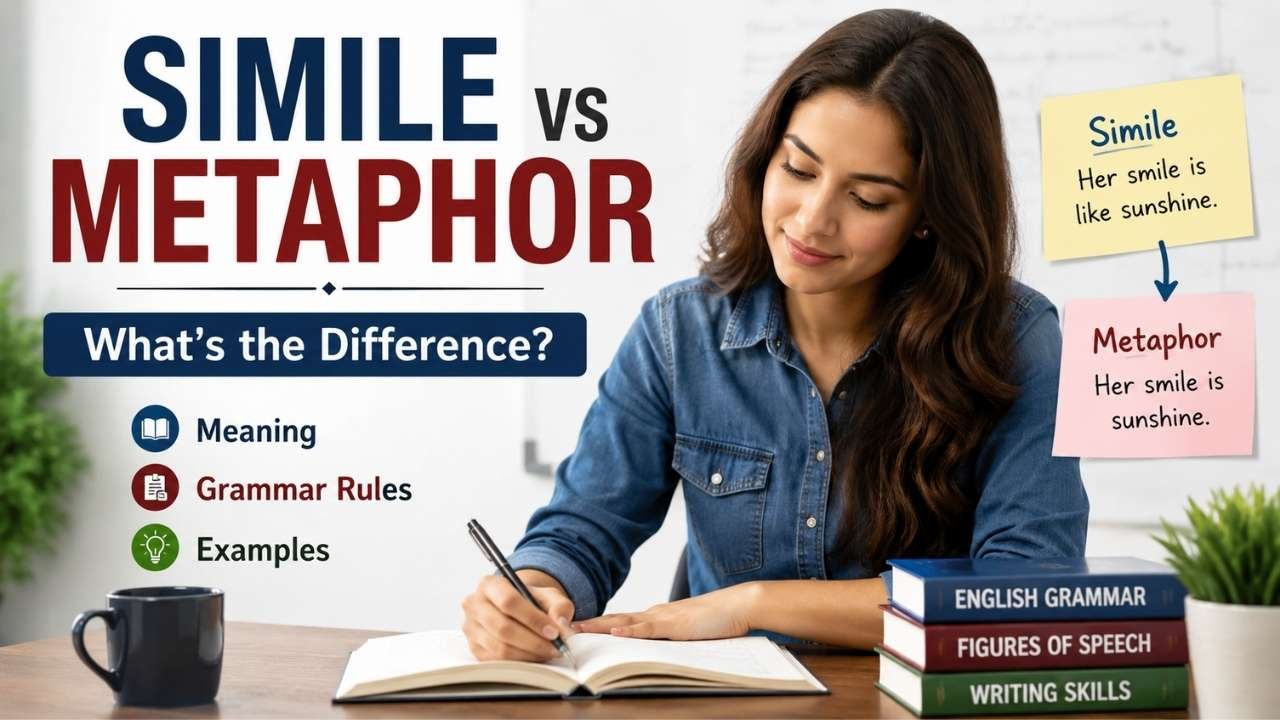
Have you ever wondered whether a sentence is a simile vs metaphor? You’re not alone. Many students, writers, and English learners often confuse these two figures of speech because both make comparisons.
However, they work in different ways and create different effects in writing. Understanding the difference between a simile and a metaphor can help you improve your grammar, write more clearly, and make your descriptions more engaging.
In this guide, you’ll learn what a simile is, what a metaphor is, their key differences, and how to identify each one with easy examples. We’ll also cover grammar rules, common mistakes, practical writing tips, and a quick quiz to test your understanding. By the end, you’ll know exactly when to use a simile or a metaphor with confidence.
Quick Answer
The main difference between a simile and a metaphor is how they make a comparison. A simile compares two unlike things using the words “like” or “as,” while a metaphor makes a direct comparison without those words. Both are figures of speech used in figurative language to make writing more vivid, engaging, and memorable through clear, descriptive imagery.
What Is a Simile?

A simile is a figure of speech that compares two different things by using the words “like” or “as.” It helps readers create a clear picture in their minds by connecting one idea with another that is familiar.
For example, “Her smile is like sunshine” and “He runs as fast as a cheetah” are both similes because they use comparison words. Similes are common in figurative language, poetry, stories, and everyday conversations because they make writing more descriptive and engaging.
Learning the simile definition is the first step toward understanding the difference between a simile and a metaphor. If you’re exploring other language topics, you may also enjoy our guide on the Metonymy vs Synecdoche, another comparison of commonly confused literary devices.
What Is a Metaphor?
A metaphor is a figure of speech that makes a direct comparison between two unlike things without using “like” or “as.” Instead of saying something is like another thing, a metaphor says it is that thing to create a stronger image.
For example, “Time is a thief” means time steals moments from our lives, while “The classroom was a zoo” suggests it was noisy and chaotic.
Metaphors are widely used in creative writing, speeches, songs, and literature because they add emotion and depth. Understanding the metaphor definition makes it much easier to identify simile vs metaphor examples and use both correctly in your own writing.
Simile vs Metaphor: Key Differences at a Glance
Although both are figures of speech, the difference between a simile and a metaphor is easy to understand once you know how each works. A simile compares two things using “like” or “as,” while a metaphor creates an indirect comparison by saying one thing is another.
For example, “She is as brave as a lion” is a simile, whereas “She is a lion” is a metaphor. Similes often make ideas easier to understand, while metaphors usually create stronger imagery and emotion.
Both improve English writing, storytelling, and descriptive language. The table below provides a quick comparison to help you remember the main differences.
| Feature | Simile | Metaphor |
| Comparison Style | Uses like or as | Direct comparison |
| Comparison Words | Yes | No |
| Meaning | Explicit comparison | Implied comparison |
| Example | He swims like a fish. | He is a fish in water. |
| Purpose | Creates clear imagery | Creates powerful imagery |
How to Identify a Simile or a Metaphor
If you are unsure whether a sentence is a simile or a metaphor, follow a few simple steps. First, look for the words “like” or “as.” If they compare two unlike things, the sentence is probably a simile.
If those words are missing and one thing is described as another, it is usually a metaphor. For example, “The baby slept like a log” is a simile, while “The baby was a log” is a metaphor.
Always think about whether the comparison is direct or indirect. Practicing with different simile vs metaphor examples will improve your understanding and help you recognize these literary devices more quickly in reading and writing.
Simile vs Metaphor Examples in Everyday Language
You don’t have to read poetry to find similes and metaphors. They appear in everyday conversations, advertisements, movies, and even sports commentary. Someone might say, “I’m as busy as a bee,” which is a simile because it uses “as.”
Another person may say, “My phone is my lifeline,” which is a metaphor because it makes a direct comparison. These expressions make communication more interesting and memorable.
Understanding these everyday examples also helps you become a better writer by adding vivid descriptions naturally. If you’re interested in improving your grammar skills further, you can also read our guide on the Plural of Bronchus, which explains another common point of confusion in English usage.
Simile vs Metaphor in Literature and Poetry
Writers have used similes and metaphors for centuries to make their stories, poems, and speeches more memorable. A simile helps readers picture an idea by comparing it with something familiar using “like” or “as.”
For example, “My love is like a red, red rose” is a famous simile. A metaphor, however, creates a stronger image by making a direct comparison, such as “All the world’s a stage.” Both are important literary devices that bring emotion, imagery, and creativity to writing.
Whether you are reading classic literature or modern novels, understanding simile vs metaphor makes it easier to appreciate the author’s message and recognize the power of figurative language.
Common Mistakes When Using Similes and Metaphors
Many learners confuse similes and metaphors, but avoiding a few common mistakes can make your writing much stronger. The biggest mistake is forgetting that a simile uses “like” or “as,” while a metaphor does not.
Another mistake is mixing too many comparisons in one sentence, which can confuse readers. Some writers also use clichés, such as “busy as a bee,” too often instead of creating fresh comparisons.
Always make sure your comparison makes sense and fits the context. Reading different simile vs metaphor examples and practicing your own sentences will help you understand the difference between a simile and a metaphor and use both confidently in everyday writing.
When Should You Use a Simile Instead of a Metaphor?
Choosing between a simile and a metaphor depends on what you want your writing to achieve. Use a simile when you want to make a comparison that is easy for readers to understand. The words “like” and “as” clearly show that you are comparing two different things.
Use a metaphor when you want stronger imagery or a deeper emotional effect. Metaphors often sound more powerful because they describe one thing as another without directly stating the comparison.
Both forms of figurative language improve storytelling, essays, speeches, and creative writing. The more you practice, the easier it becomes to decide which one fits your message best.
Can a Sentence Contain Both a Simile and a Metaphor?
Yes, a sentence or paragraph can include both a simile and a metaphor, as long as each comparison is clear and natural.
For example, “She fought like a lion, and on the battlefield she was a fearless warrior.” The first comparison is a simile because it uses “like,” while the second is a metaphor because it directly describes her as something else.
Using both together can make writing more vivid and engaging, but avoid adding too many comparisons in one sentence. Too much figurative language may distract readers. The best writing uses similes and metaphors carefully to support the message rather than overwhelm it.
Memory Trick to Never Confuse Similes and Metaphors Again
A simple memory trick can help you remember the difference between a simile and a metaphor forever. Think of the word SIMILE as containing the word “LIKE.” Whenever you see “like” or “as” comparing two different things, you are probably looking at a simile.
A metaphor, on the other hand, skips those comparison words and makes a direct statement instead.
Remember this easy example: “He is like a rock” is a simile, while “He is a rock” is a metaphor. This quick trick is especially helpful for students, teachers, and anyone learning figurative language or preparing for English exams.
Practice Quiz: Is It a Simile or a Metaphor?
Test your understanding with these simple examples. Decide whether each sentence is a simile or a metaphor before checking the answers.
- The stars were diamonds in the sky. (Metaphor)
- He eats like a horse. (Simile)
- Her voice is music to my ears. (Metaphor)
- The baby slept like a log. (Simile)
- His heart is made of stone. (Metaphor)
If you answered most of them correctly, you already understand the basic difference between a simile and a metaphor. Keep practicing with new examples to improve your writing and recognize these figures of speech more easily.
FAQs
What is the main difference between a simile and a metaphor?
A simile compares two unlike things using “like” or “as,” while a metaphor makes a direct comparison without using those words.
Is a simile a type of metaphor?
No. Although both are figures of speech, they are different forms of figurative language with their own rules.
Does a metaphor always avoid the words “like” and “as”?
Yes. A metaphor creates a direct comparison and normally does not use “like” or “as.”
Why do writers use similes and metaphors?
They make writing more descriptive, create vivid imagery, and help readers understand ideas more clearly.
Can children learn similes and metaphors easily?
Yes. Using simple examples and everyday comparisons makes these literary devices easy to understand.
Are similes and metaphors used in everyday speech?
Absolutely. People use them regularly in conversations, advertising, music, movies, and social media.
How can I identify a simile quickly?
Look for the words “like” or “as.” If they compare two unlike things, the sentence is usually a simile.
Conclusion
Understanding simile vs metaphor is easier than it first appears. Both are powerful figures of speech that make writing more interesting, but they create comparisons in different ways. A simile uses “like” or “as,” while a metaphor makes a direct comparison without those words.
Once you learn this simple rule, identifying and using each one becomes much easier. Practice with everyday examples, books, and conversations to build your confidence.
Whether you’re a student, teacher, or writer, mastering similes and metaphors will improve your English writing, strengthen your creativity, and help you communicate ideas with greater clarity and impact.
2 thoughts on “Simile vs Metaphor: What’s the Difference? Meaning & Examples”