
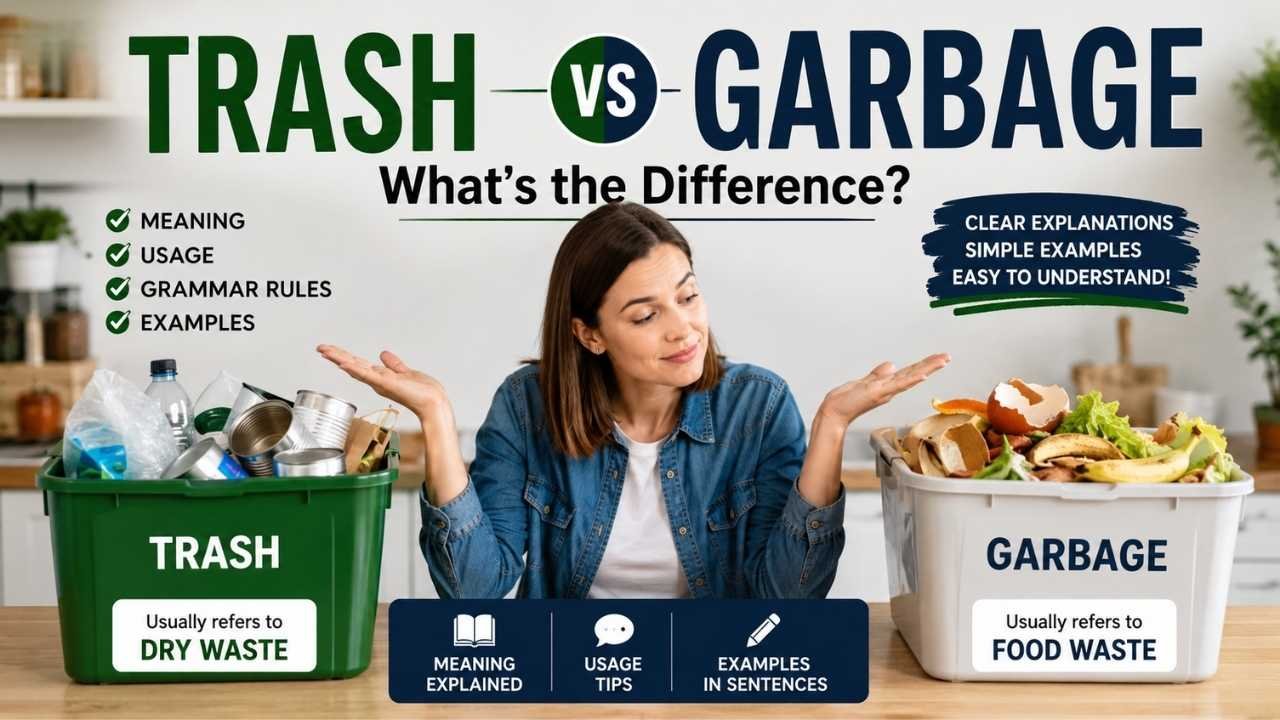
Have you ever wondered whether trash vs garbage mean the same thing? Many people use these words interchangeably, but they can have slightly different meanings depending on the context.
Understanding the difference between trash and garbage can improve your writing, expand your vocabulary, and help you choose the right word in everyday conversations. In simple terms, garbage often refers to food waste or kitchen waste, while trash usually includes dry household waste such as paper, plastic, or broken items.
However, in everyday American English, the two terms are frequently treated as synonyms. In this guide, you’ll learn the trash vs garbage difference, their meanings, real-life examples, regional usage, common mistakes, and practical tips to help you use each word with confidence.
Quick Answer
Trash and garbage are closely related words, but they are not always identical. Garbage usually refers to food waste or organic kitchen waste, while trash includes dry household waste like paper, plastic, and broken items. In everyday American English, people often use the terms interchangeably, but understanding their subtle differences helps you choose the right word in writing and conversation.
What Does “Trash” Mean?
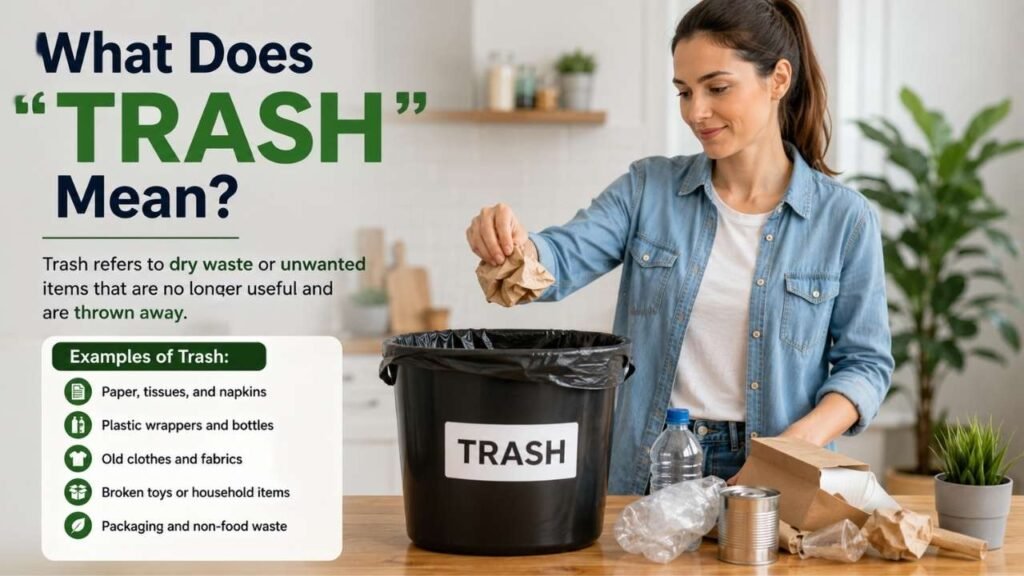
Trash refers to dry household waste that is no longer useful and is ready to be thrown away. It usually includes items like paper, cardboard, plastic bottles, old clothes, broken toys, packaging, and other non-food materials. In everyday American English, people often use trash as a general word for almost any type of waste.
However, in waste management, it commonly describes dry, non-organic materials rather than food waste. Understanding the trash meaning helps you choose the correct word in different situations.
If you enjoy learning about confusing English terms, you may also like our guide on Analogy vs Simile, which explains another pair of words that people often mix up. Knowing these small differences can make your writing more accurate and natural.
What Does “Garbage” Mean?
Garbage usually refers to food waste or organic kitchen waste that comes from cooking or eating. Examples include fruit peels, leftover meals, vegetable scraps, eggshells, and spoiled food. In many cities, garbage is collected separately because it can produce odors and may be composted or processed differently from other waste.
Although many people use garbage and trash as the same word in daily conversation, their technical meanings are slightly different. Learning the garbage meaning makes it easier to understand discussions about recycling and waste disposal.
If you enjoy improving your English grammar, you can also read our article on the Plural of Stimulus, which explains another commonly misunderstood word in a simple and practical way.
Trash vs Garbage: Key Differences Explained
The main difference between trash and garbage is the type of waste each word describes. Garbage generally means food waste or other organic waste, while trash usually refers to dry household waste such as paper, plastic, glass, and broken objects.
In everyday speech, especially in the United States, many people use both words interchangeably. However, understanding the distinction is useful when writing, speaking, or discussing waste management. The table below highlights the key differences.
| Feature | Trash | Garbage |
| Meaning | Dry household waste | Food or kitchen waste |
| Waste Type | Non-organic | Organic |
| Examples | Paper, plastic, boxes | Leftover food, fruit peels |
| Everyday Usage | Very common | Very common |
| Waste Management | Dry waste | Kitchen waste |
Understanding trash vs garbage helps you choose the most accurate word for every situation.
Is Trash the Same as Garbage?
Many people ask, “Is trash the same as garbage?” The short answer is not always. In everyday conversations, especially in American English, the two words are often treated as synonyms because both describe unwanted waste.
However, their traditional meanings are slightly different. Garbage usually refers to food waste, while trash includes dry waste such as paper, cardboard, plastic, or old household items.
Dictionaries recognize that the terms are commonly used interchangeably, but waste management professionals may separate them based on the type of material. Understanding this small difference helps you write more clearly, answer grammar questions accurately, and communicate with greater confidence in both formal and informal situations.
Trash vs Garbage in American and British English
The words people use for waste often depend on where they live. In American English, both trash and garbage are common, although trash is often used as a general term for household waste.
Garbage usually suggests food or kitchen waste, but many Americans use it for all kinds of waste. In British English, the preferred word is rubbish, while bin is commonly used instead of trash can or garbage can.
In Canada and Australia, usage varies, and people may use trash, garbage, or rubbish depending on local habits. Knowing these regional differences helps English learners choose the right word and avoid confusion when speaking or writing with people from different countries.
Examples of Trash and Garbage in Sentences
The easiest way to understand trash vs garbage is by seeing both words in real-life sentences. Trash is commonly used for dry household waste, while garbage usually refers to food waste or organic kitchen waste. Here are a few examples:
- Please take the trash out before you leave.
- She threw the empty bottle into the trash bin.
- The garbage smells because it contains leftover food.
- We separate garbage from recyclable materials every day.
- The city collects trash and garbage on different days.
- Kitchen garbage can be turned into compost.
These examples show that although the words are often interchangeable, using the correct one makes your writing and speech more accurate and natural.
Common Mistakes People Make
Many English learners make small mistakes when using trash and garbage. One common mistake is thinking they always have exactly the same meaning. Although people often use them interchangeably, garbage traditionally means food waste, while trash usually refers to dry household waste.
Another mistake is confusing these words with rubbish, refuse, junk, or litter. Each word has a slightly different meaning and is used in different situations. Some writers also use garbage when talking about recyclable items, which is not always accurate.
Learning the difference between trash and garbage helps you avoid these errors and makes your English sound more natural, whether you are writing, speaking, or answering grammar questions.
Similar Words You Should Know
Besides trash and garbage, English has several other words that describe different kinds of waste. Rubbish is the most common term in British English for household waste. Refuse is a more formal word that often appears in official or legal writing.
Junk usually refers to old or unwanted items that may still have some value, while litter means waste that has been carelessly dropped in public places. Debris describes broken pieces left after storms, accidents, or construction work.
Compost is organic material, such as fruit peels and vegetable scraps, that can be recycled into fertilizer. Understanding these related words improves your vocabulary and helps you choose the most accurate term in every situation.
When Should You Use Trash or Garbage?
Choosing between trash and garbage depends on the situation and your audience. If you are talking about food waste, garbage is usually the better choice. When referring to dry household waste like paper, cardboard, plastic, or old packaging, trash is generally more accurate.
In everyday conversation, especially in the United States, either word is acceptable because most people understand both. However, in professional writing, school assignments, or discussions about waste management, using the correct term makes your message clearer.
If you are writing for an international audience, remember that readers in the United Kingdom often prefer the word rubbish. Understanding these differences helps you communicate with confidence in any setting.
Trash vs Garbage in Waste Management
In waste management, trash and garbage are often separated because they require different handling methods. Garbage, which mainly includes organic waste such as leftover food and kitchen scraps, can be composted or processed to reduce landfill waste.
Trash, on the other hand, usually consists of dry household waste like paper, plastic, glass, and other non-organic materials. Some of these items can be recycled, while others are sent to landfills.
Many cities ask residents to sort their waste before collection to improve recycling and protect the environment. Understanding the technical meaning of trash vs garbage not only improves your vocabulary but also helps you follow local recycling rules and support cleaner, more sustainable communities.
FAQs
Is garbage only food waste?
Traditionally, garbage refers to food or kitchen waste, although many people use it for all household waste.
Is trash recyclable?
Some trash, such as paper, cardboard, glass, and certain plastics, can be recycled if local recycling programs accept them.
Why do Americans say trash instead of garbage?
In everyday American English, trash is often used as a general term for household waste, while garbage commonly refers to food waste.
Is rubbish the same as trash?
Yes. Rubbish is the preferred word in British English, while trash is more common in American English.
What is refuse?
Refuse is a formal word for waste and is often used in government or waste management documents.
Which word should I use in writing?
Use garbage for food waste and trash for dry household waste when the distinction matters. In casual writing, either word is usually acceptable.
Are trash and garbage synonyms?
Yes. In everyday conversation, they are often treated as synonyms, even though they have slightly different traditional meanings.
Conclusion
Understanding trash vs garbage is easier once you know how each word is commonly used. Garbage usually refers to food waste or organic kitchen waste, while trash generally means dry household waste such as paper, plastic, and broken items.
Although the two words are often used interchangeably in American English, knowing their traditional meanings can improve your writing and make your communication more precise. It also helps you understand discussions about waste management, recycling, and regional language differences.
Whether you are an English learner, a student, or simply curious about everyday vocabulary, using the right word in the right context will make your English sound more natural and confident.