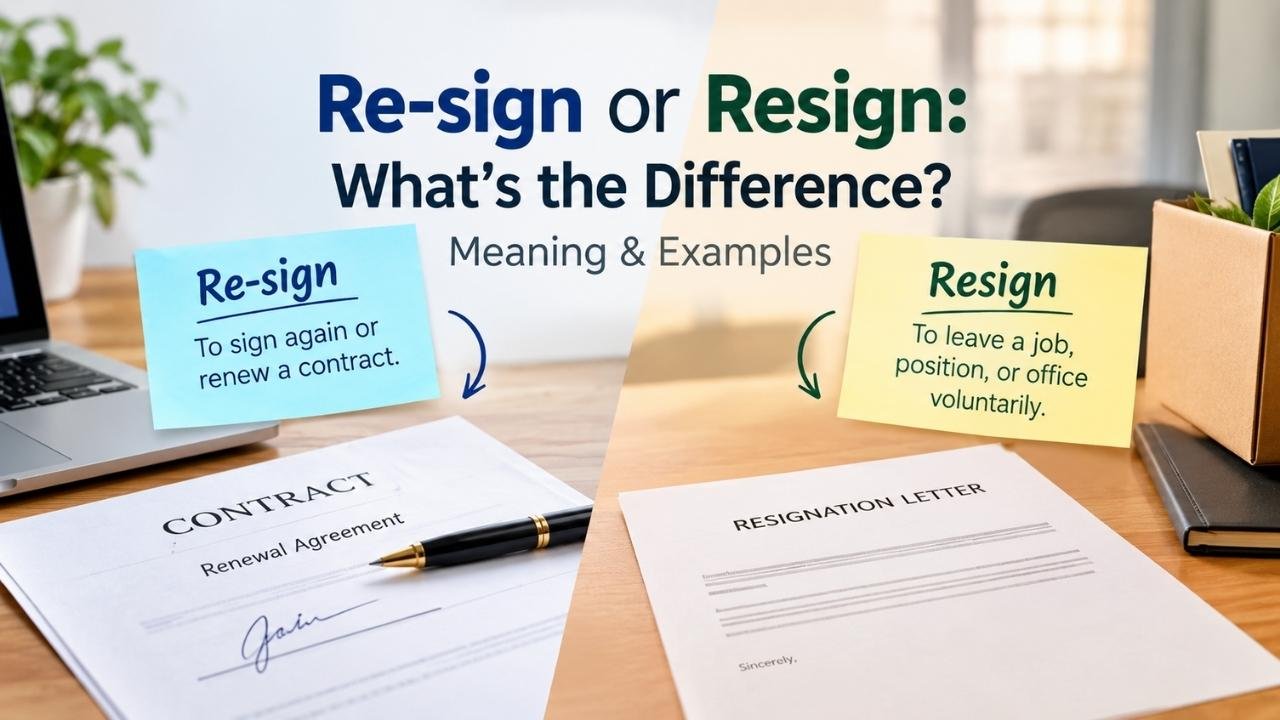
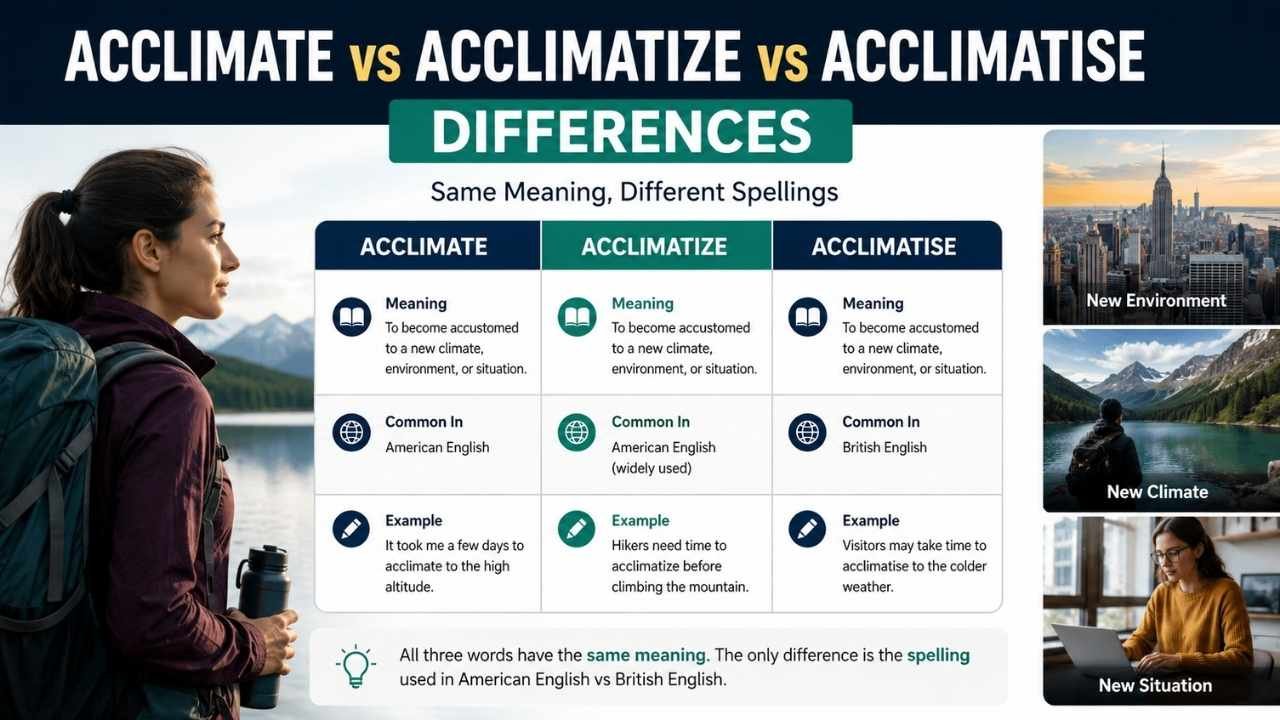
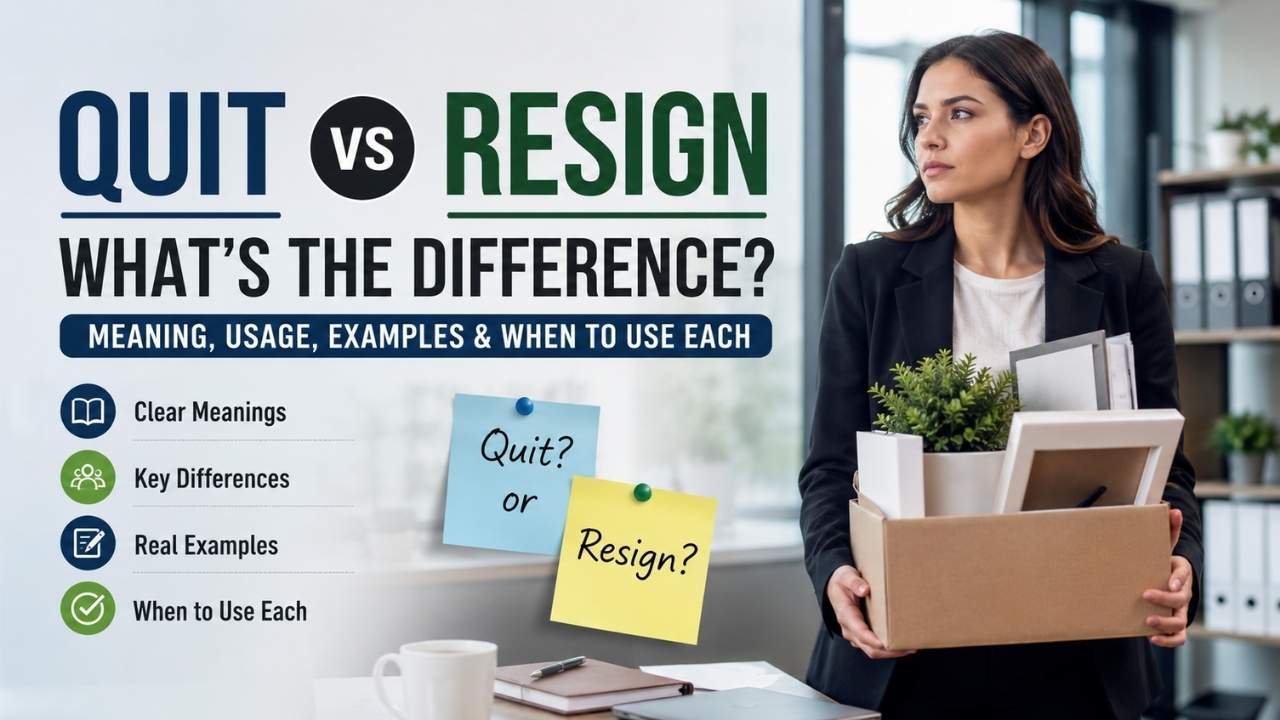
Re-sign or Resign: What’s the Difference? Meaning & Examples

Choosing between re-sign and resign can be confusing because the two words look almost identical, yet they have completely opposite meanings.

Choosing between re-sign and resign can be confusing because the two words look almost identical, yet they have completely opposite meanings. A single hyphen changes everything.  Resign means to quit a job, position, or responsibility, while re-sign means to sign something again, such as renewing a contract or agreeing to continue with a team. This … Read more

Afterward vs Afterwards: What is Difference? Meaning & Examples

Choosing between afterward vs afterwards can be confusing, especially if you're unsure which spelling is correct.

Choosing between afterward vs afterwards can be confusing, especially if you’re unsure which spelling is correct. The good news is that both words are grammatically correct and share the same meaning.  The main difference comes down to American English and British English usage. In the United States, afterward is the preferred spelling, while afterwards is … Read more

Full Time or Full-Time: Grammar Rules With Examples

Woman studying grammar rules at a desk with a laptop and educational text explaining full time and full-time usage.

When writing about full time or full-time, many people wonder which version is correct. The answer depends on how the phrase is used in a sentence. Sometimes full time is written as two separate words, while full-time needs a hyphen.  Knowing the difference can help you avoid common grammar mistakes in emails, resumes, job descriptions, … Read more

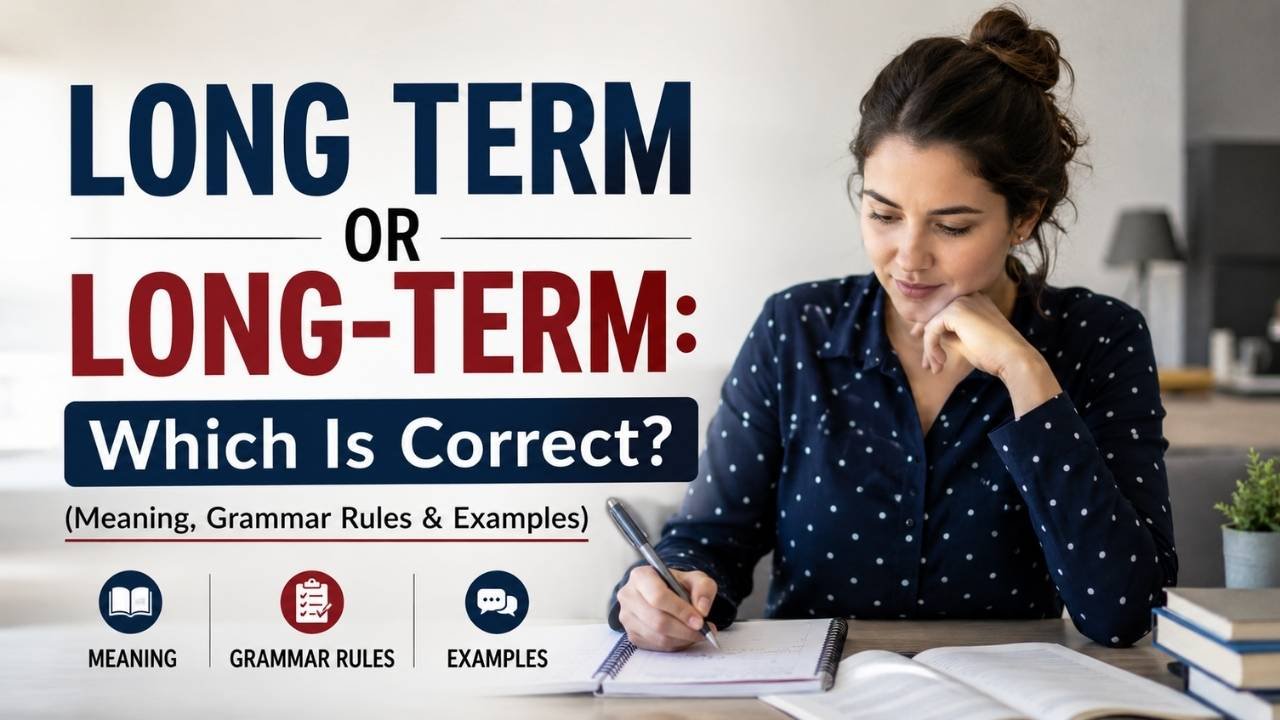
Long Term or Long-Term: Which Is Correct? (Meaning & Examples) 

If you've ever wondered whether to write long term or long-term, you're not alone.

If you’ve ever wondered whether to write long term or long-term, you’re not alone. Many writers, students, and professionals get confused because both forms are correct, but they are used in different situations.  The difference comes down to a simple grammar rule about hyphenated compound adjectives. In general, long-term is used before a noun, as … Read more