
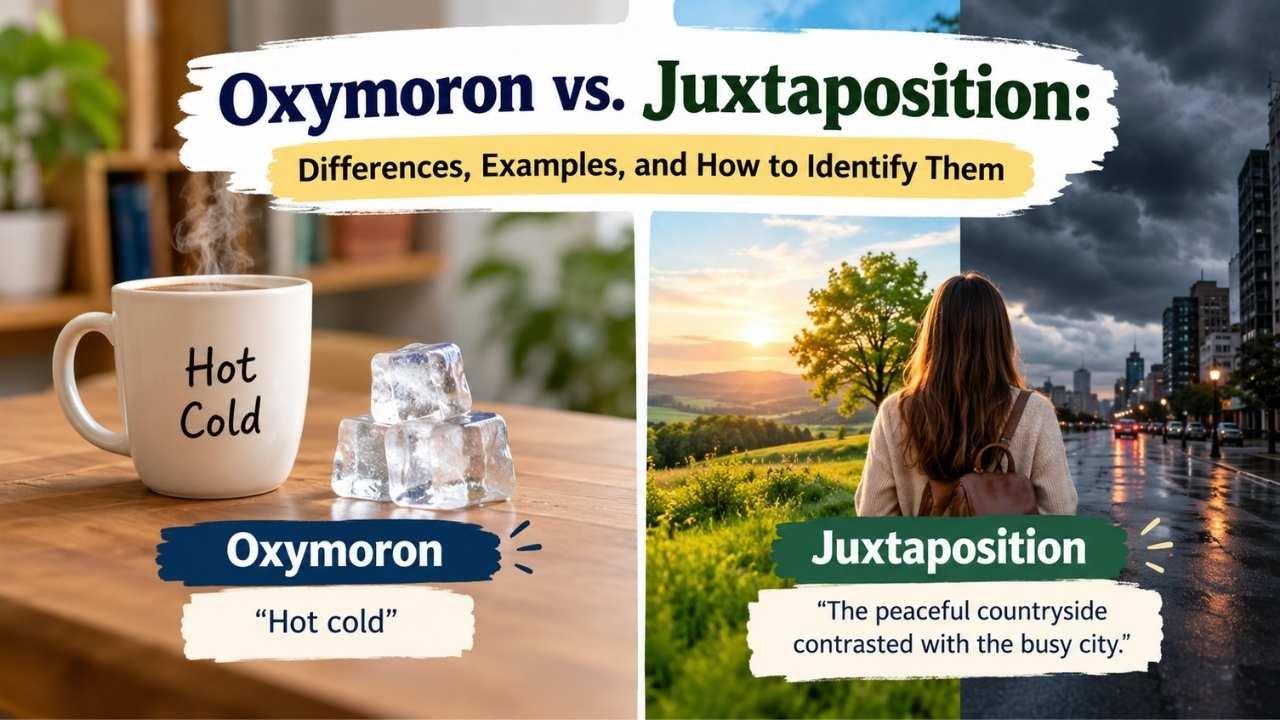
Have you ever wondered about the difference between oxymoron vs. juxtaposition? These two literary devices are often confused because both involve contrasting ideas, but they work in different ways.
An oxymoron combines two opposite words or concepts into a short phrase, while juxtaposition places two different elements together to highlight their contrast. Understanding the difference between oxymoron and juxtaposition can help you improve your writing, analyze literature, and recognize how authors create deeper meanings.
In this guide, we will explore oxymoron and juxtaposition examples, explain their key differences, and show how writers use these techniques to make their words more powerful, memorable, and meaningful.
Quick Answer
An oxymoron combines two opposite or contradictory words together in a short phrase, such as “deafening silence” or “bittersweet.” Juxtaposition is a broader literary device that places two contrasting ideas, characters, or situations together to highlight their differences. While an oxymoron can be a type of juxtaposition, not all juxtaposition examples are oxymorons.
What Is an Oxymoron? Meaning, Definition, and Examples
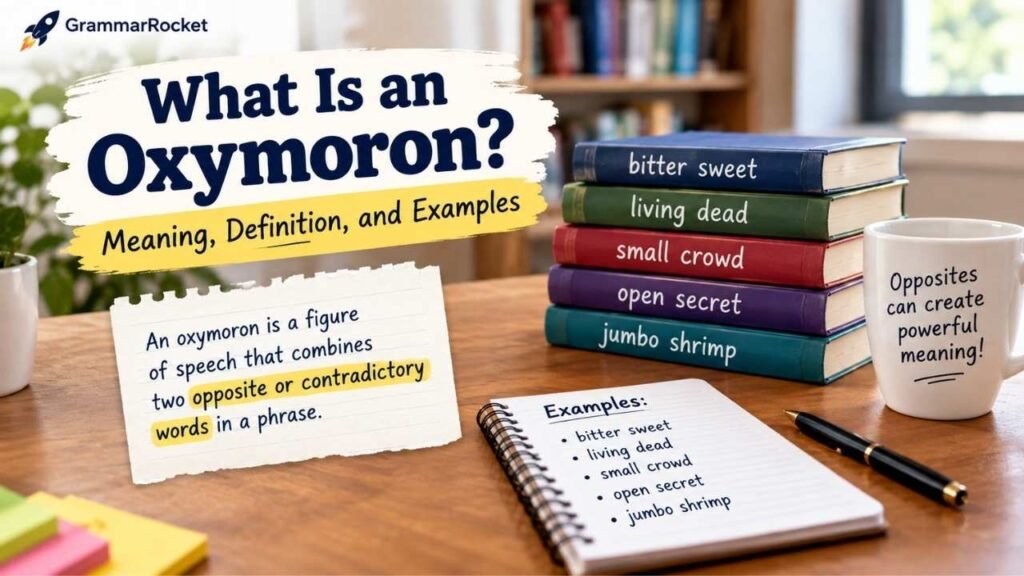
An oxymoron is a common literary device that combines two words or ideas with opposite meanings to create a special effect. The oxymoron definition is based on bringing together contradictory terms that seem impossible but create a deeper meaning.
For example, phrases like “deafening silence,” “bittersweet,” and “open secret” join opposite ideas to express emotions or situations in a powerful way.
Writers use oxymorons to create irony, show complex feelings, or make descriptions more memorable. Unlike a simple contradiction, an oxymoron intentionally places opposing words together.
Understanding what an oxymoron is helps readers recognize how authors use language creatively in poetry, stories, and everyday expressions.
Common Examples of Oxymorons in Sentences
Understanding oxymoron examples is one of the easiest ways to identify this literary technique. An oxymoron usually contains two words that seem to disagree but create a meaningful expression when combined.
For example, “living dead” describes something that appears alive but is not truly living, while “cruel kindness” shows a situation where kindness may involve something painful.
Here are some common oxymoron examples in sentences:
- The movie created a feeling of deafening silence after the character left.
- Their goodbye was a bittersweet moment.
- The project was a complete organized chaos.
These examples show how contradictory words can create stronger emotions and clearer messages.
What Is Juxtaposition? Meaning, Definition, and Examples
Juxtaposition is a broader literary technique that places two different or contrasting elements close together to show their differences. The juxtaposition definition focuses on comparison rather than combining opposite words. Writers may use juxtaposition with characters, settings, ideas, objects, or situations to create a stronger impact.
For example, showing a wealthy person and a poor person in the same scene creates juxtaposition by highlighting the difference between their lives. Similarly, placing light beside darkness can create a contrast between hope and fear.
Understanding what juxtaposition is helps readers analyze how authors create meaning. Unlike an oxymoron, juxtaposition does not need to use opposite words in the same phrase.
Examples of Juxtaposition in Sentences and Literature
Juxtaposition examples can be found in many forms of writing, including novels, poems, movies, and everyday communication. Writers use this technique to make differences more noticeable and help readers understand important ideas.
Examples of juxtaposition include:
- A peaceful village shown next to a dangerous battlefield.
- A young character interacting with an elderly character to show differences in experience.
- A story showing happiness during a difficult time.
In literature, juxtaposition can reveal themes such as good versus evil, wealth versus poverty, or freedom versus control. Unlike an oxymoron, where opposite meanings appear together in a short phrase, juxtaposition creates contrast by placing separate elements side by side.
Oxymoron vs. Juxtaposition: What Is the Main Difference?
The main difference between oxymoron vs. juxtaposition is how the contrast is created. An oxymoron combines two contradictory words or ideas into one short expression. For example, “pretty ugly” contains opposing meanings within the same phrase.
On the other hand, juxtaposition places two separate things together to show a contrast. For example, a writer may place a hero and villain in the same scene to highlight their differences.
In simple terms:
- Oxymoron = opposite ideas joined together
- Juxtaposition = different ideas placed together
Both are useful literary devices, but they create contrast in different ways. Knowing this difference makes it easier to identify each technique while reading or writing.
Oxymoron vs. Juxtaposition Comparison Table
A clear comparison table can make the difference between oxymoron and juxtaposition easier to understand. Although both techniques use contrast, their structure and purpose are different.
| Feature | Oxymoron | Juxtaposition |
| Meaning | Combines contradictory words | Places contrasting elements together |
| Structure | Usually a short phrase | Can include scenes, characters, ideas, or objects |
| Main Purpose | Creates irony or deeper meaning | Highlights differences and comparisons |
| Example | “Deafening silence” | A rich character beside a poor character |
| Common Use | Phrases, poetry, descriptions | Stories, literature, arguments |
Understanding this comparison helps readers quickly recognize whether a writer is using an oxymoron or juxtaposition.
Related Literary Devices: Oxymoron, Juxtaposition, and Other Techniques
Many literary devices use contrast, sound, or word relationships to create meaning. For example, oxymoron focuses on contradictory words, while juxtaposition focuses on placing different elements together. Other techniques may also seem similar but have their own rules.
For readers interested in understanding sound-based literary techniques, learning about Alliteration vs Consonance can help explain how writers create effects through repeated sounds. While oxymoron and juxtaposition focus on meaning and contrast, alliteration and consonance focus on sound patterns.
Similarly, understanding language rules and word forms can improve overall writing skills, such as learning the correct Plural of Phylum when studying academic or scientific vocabulary.
Are Oxymoron and Juxtaposition the Same Thing?
Many readers wonder, “Are oxymoron and juxtaposition the same?” Although these two literary devices are connected, they are not exactly the same. An oxymoron can be a type of juxtaposition because it places opposite ideas together, but juxtaposition is a much broader technique.
For example, the phrase “living dead” is an oxymoron because two opposite words are combined in one expression. It also shows juxtaposition because two conflicting ideas are placed together. However, a scene showing a rich person and a poor person together is only juxtaposition, not an oxymoron.
In simple terms, an oxymoron creates contrast inside words, while juxtaposition creates contrast between separate elements.
How to Identify an Oxymoron vs. Juxtaposition Easily
Knowing how to identify oxymoron vs. juxtaposition becomes easier when you look at where the contrast appears. These two techniques may seem similar, but a simple rule can help you recognize them.
Ask yourself:
Are two opposite words combined into one phrase?
→ It is likely an oxymoron.
Examples:
- Awfully good
- Silent scream
- Original copy
Are two different ideas, objects, or situations placed near each other?
→ It is likely juxtaposition.
Examples:
- A bright sunny day during a sad scene
- A hero standing beside a villain
This quick method helps students, writers, and readers understand the difference between oxymoron and juxtaposition.
Why Do Writers Use Oxymorons and Juxtaposition?
Writers use oxymorons and juxtaposition to make their writing more interesting and meaningful. These writing techniques help create strong emotions, highlight differences, and encourage readers to think more deeply about a message.
An oxymoron can show complicated feelings or ideas that cannot be explained with simple words. For example, “bittersweet” describes a moment that contains both happiness and sadness.
Juxtaposition, on the other hand, helps writers compare different situations, characters, or ideas. It can show conflicts such as good versus evil, freedom versus control, or hope versus fear.
Both techniques are valuable literary elements because they make stories, poems, and descriptions more powerful. They allow writers to communicate deeper meanings in creative ways.
Oxymoron vs. Juxtaposition in Creative Writing
In creative writing, authors use oxymoron and juxtaposition to make their words more memorable and engaging. These techniques help create stronger images and allow readers to understand emotions in a unique way.
Writers may use an oxymoron when they want to express a complicated thought using only a few words. For example, “beautiful disaster” quickly creates a feeling of something both positive and negative.
Writers use juxtaposition when they want to compare different ideas, characters, or settings. A story may place a peaceful moment beside a violent event to create a stronger emotional effect.
Using these literary techniques correctly can improve storytelling. However, writers should use them with purpose instead of adding contrasts only to make sentences sound creative.
Common Mistakes When Using Oxymoron and Juxtaposition
Although oxymoron and juxtaposition are popular literary devices, many people confuse their meanings or use them incorrectly. Understanding common mistakes can help improve writing and literary analysis.
One common mistake is thinking that every contrast is an oxymoron. An oxymoron requires opposite ideas to appear together in a short phrase, such as “alone together.” A simple comparison between two different things is usually juxtaposition.
Another mistake is assuming juxtaposition always involves direct opposites. Juxtaposition can also compare different moods, characters, settings, or ideas.
Writers should also avoid using these techniques without a clear purpose. Effective use of oxymorons and juxtaposition should add meaning, emotion, or clarity to the writing.
Oxymoron vs. Paradox vs. Juxtaposition: Understanding the Differences
Oxymoron, paradox, and juxtaposition are often confused because they all involve unusual or contrasting ideas. However, they work differently.
An oxymoron combines two opposite words in a short phrase.
Example:
- “Jumbo shrimp”
A paradox is a statement that seems impossible or contradictory but may reveal a deeper truth.
Example:
- “Less is more.”
A juxtaposition places two different elements together to highlight their differences.
Example:
- A scene showing wealth next to poverty
Understanding these differences helps readers analyze literary devices more accurately. While an oxymoron focuses on a small combination of conflicting words, paradox focuses on a surprising idea, and juxtaposition focuses on comparison between separate elements.
Real-World Examples of Oxymoron and Juxtaposition
Oxymoron and juxtaposition examples are not limited to books and poetry. These techniques appear in everyday conversations, advertisements, movies, and popular culture.
Common oxymoron examples include:
- Clearly confused
- Act naturally
- Same difference
- Virtual reality
Examples of juxtaposition include:
- A luxury advertisement showing a simple lifestyle
- A movie scene showing happiness during a difficult event
- A story comparing a hero and a villain
These examples show how writers and creators use contrast to attract attention and create stronger messages. Whether used in literature or daily communication, these figures of speech help express ideas in a memorable way.
FAQs
What is the difference between oxymoron and juxtaposition?
An oxymoron combines opposite words into a single phrase, while juxtaposition places separate contrasting ideas, objects, or situations together.
Is an oxymoron a type of juxtaposition?
Yes, an oxymoron can be considered a specific type of juxtaposition because it places opposing ideas together. However, not every juxtaposition is an oxymoron.
Can juxtaposition contain an oxymoron?
Yes. A piece of writing can use juxtaposition and include an oxymoron within that comparison.
What are some examples of oxymorons?
Examples include “deafening silence,” “bittersweet,” “open secret,” and “living dead.”
What are some examples of juxtaposition?
Examples include light and darkness, wealth and poverty, or youth and old age placed together.
Is juxtaposition always about opposite ideas?
No. Juxtaposition can involve any contrasting elements, even if they are not complete opposites.
Why do writers use oxymorons and juxtaposition?
Writers use them to create emphasis, show contrast, express emotions, and make their writing more memorable.
Conclusion
Understanding oxymoron vs. juxtaposition becomes easier when you remember their main difference. An oxymoron combines contradictory words or ideas into a short phrase, while juxtaposition places separate contrasting elements together to create a comparison.
Both are powerful literary devices that help writers communicate deeper meanings and create stronger emotional effects. An oxymoron can be a type of juxtaposition, but juxtaposition covers a much wider range of contrasts in writing.
By learning their definitions, examples, and uses, readers can better analyze literature and writers can create more engaging content. Whether you are studying English, improving your writing, or exploring literary techniques, knowing how these devices work will help you understand the power of language.